pattern

ACT Humanities - Law and Obligations

Here you will learn some English words related to law and obligations, such as "waive", "acquittal", "parole", etc. that will help you ace your ACTs.

Review

Flashcards

Forms

Spelling

Quiz

Start learning
ACT Vocabulary for Humanities
proceeding

the formal process or legal action taken within a court to resolve a dispute, administer justice, etc.

Ex: The administrative proceeding addressed complaints regarding environmental violations by the company .
Close
Sign in
affidavit
affidavit
[noun]

a written statement affirmed by oath that can be used as evidence in court

Ex: Falsifying information in an affidavit can result in serious legal consequences , including perjury charges .
Close
Sign in
testimony
testimony
[noun]

a formal statement saying something is true, particularly made by a witness in court

Ex: The defense attorney cross-examined the witness to challenge the credibility of their testimony.
Close
Sign in
accusation

the act of blaming and charging someone for their wrong act

Close
Sign in
ruling
ruling
[noun]

a decision made by someone with official power, particularly a judge

Ex: The school board 's ruling to implement a new dress code policy sparked controversy among parents and students .
Close
Sign in
felony
felony
[noun]

a serious crime such as arson, murder, rape, etc.

Ex: His criminal record showed multiple felonies, making it difficult for him to find employment after his release from prison .
Close
Sign in
parole
parole
[noun]

(law) the permission for a prisoner to leave prison before the end of their imprisonment sentence, on the condition of good conduct

Ex: Parole offers offenders the opportunity for rehabilitation and reintegration into society under supervision, with the goal of reducing recidivism.
Close
Sign in
penalty
penalty
[noun]

a punishment given for breaking a rule, law, or legal agreement

Ex: He was given a penalty for breaking the terms of his contract .
Close
Sign in
libel
libel
[noun]

a published false statement that damages a person's reputation

Ex: The court ruled in favor of the plaintiff , awarding damages for the emotional distress and financial loss caused by the libel.
Close
Sign in
infraction

the act of breaking or not obeying a law, agreement, etc.

Ex: The company has a zero-tolerance policy for infractions of its code of conduct , enforcing strict penalties for violations .
Close
Sign in
trustee
trustee
[noun]

a person or group of people who control the property or money that belongs to another person

Ex: The trustee made investments on behalf of the trust to grow its assets over time .
Close
Sign in
counterclaim

a response in court, stating an opposing demand

Close
Sign in
offender
offender
[noun]

a person who commits a crime

Ex: Community service can be a constructive way for offenders to make amends for their actions and contribute positively to society .
Close
Sign in
infringement

an action that is against a law. regulation, or agreement

Close
Sign in
advocate
advocate
[noun]

an authorized practitioner of law who defends a person's case in a courtroom
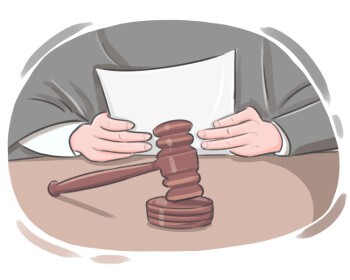
Ex: The judge commended the advocate for their thorough preparation and professionalism during the trial .
Close
Sign in
verdict
verdict
[noun]

an official decision made by the jury in a court after the legal proceedings

Ex: The media reported on the landmark verdict that set a new precedent in criminal law .
Close
Sign in
acquittal
acquittal
[noun]

an official judgment in court of law that declares someone not guilty of the crime they were charged with

Ex: Following the acquittal, the defendant was released from custody and allowed to resume their normal life .
Close
Sign in
reformatory

an institution designed to reform or rehabilitate young offenders rather than simply punish them

Ex: Graduates of the reformatory often speak about how the experience helped them turn their lives around .
Close
Sign in
penitentiary

a prison or correctional facility where individuals convicted of serious crimes are confined and undergo rehabilitation

Ex: The penitentiary is located on the outskirts of the city , surrounded by high walls and guard towers .
Close
Sign in
statutory
statutory
[Adjective]

according to or allowed by law

Ex: Tax deductions are subject to statutory limits set forth in the Internal Revenue Code .
Close
Sign in
judicial
judicial
[Adjective]

belonging or appropriate for a court, a judge, or the administration of justice

Ex: Lawyers play a crucial role in presenting arguments and evidence before the judicial authorities .
Close
Sign in
indeterminate
indeterminate
[Adjective]

(of a judicial sentence) establishing a range of time within which the offender will serve their sentence, with the possibility of early release

Ex: An indeterminate sentence allows for the possibility of early release , contingent upon the offender 's behavior .
Close
Sign in
to indict
to indict
[Verb]

to officially accuse a person of a crime
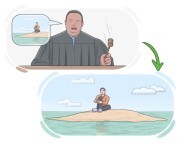
Ex: The investigators are currently indicting the suspect for money laundering .
Close
Sign in
to banish
to banish
[Verb]

to force someone to leave a country, often as a form of punishment or to keep them away

Ex: The criminal was banished from the country as part of the punishment for their crimes .
Close
Sign in
to slander

to make false and adverse statements about someone for defamation

Close
Sign in
to exile
to exile
[Verb]

to force someone to live away from their native country, usually due to political reasons or as a punishment
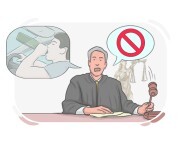
Ex: The journalist was exiled for exposing government corruption .
Close
Sign in
to outlaw
to outlaw
[Verb]

to officially state that something is illegal

Ex: To address concerns about privacy , the government moved to outlaw certain intrusive surveillance practices .
Close
Sign in
to waive
to waive
[Verb]

to voluntarily relinquish or give up a right, claim, or privilege
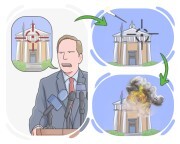
Ex: They waived the rules for this special case .
Close
Sign in
to authorize

to officially give permission for a specific action, process, etc.

Ex: Banks often require customers to authorize certain transactions through a signature or other verification methods .
Close
Sign in
to enact
to enact
[Verb]

to approve a proposed law

Ex: The government is currently enacting emergency measures in response to the crisis .
Close
Sign in
to convict

to announce officially that someone is guilty of a crime in a court of law
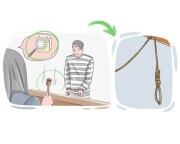
Ex: Over the years , the legal system has occasionally convicted high-profile figures for various offenses .
Close
Sign in
to execute

to kill someone, especially as a legal penalty
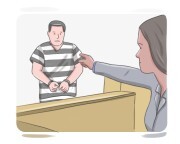
Ex: International human rights organizations often condemn governments that execute individuals without fair trials or proper legal representation .
Close
Sign in
to prosecute

to try to charge someone officially with a crime in a court as the lawyer of the accuser

Ex: He hired an expert to help prosecute the case , ensuring every legal angle was covered .
Close
Sign in
to arbitrate

to officially resolve a disagreement between people

Ex: The parents asked their older child to arbitrate the argument between their younger siblings .
Close
Sign in
non-disclosure agreement

a legally binding contract between parties, typically individuals or businesses, that outlines confidential information that the parties agree not to disclose to others

Ex: Before entering into negotiations , both parties agreed to sign a non-disclosure agreement.
Close
Sign in
confidentiality

the assurance that sensitive information will not be divulged without proper consent

Ex: The therapist assured the client of complete confidentiality during counseling sessions to foster trust .
Close
Sign in
obligation

an action that one must perform because they are legally or morally forced to do so

Ex: Attending the meeting was not just a suggestion but an obligation for all department heads .
Close
Sign in
provision
provision
[noun]

an agreed-upon condition or requirement outlined in an agreement, law, or document

Ex: The will had a provision specifying how the estate should be divided among the heirs .
Close
Sign in
inviolable
inviolable
[Adjective]

unable to be broken or dishonored, often due to its importance or protection by law or custom

Ex: In a democratic society , the principles of justice and fairness are deemed inviolable.
Close
Sign in
to exempt
to exempt
[Verb]

to officially excuse someone from a requirement or obligation

Ex: The government may exempt certain charitable organizations from paying income taxes .
Close
Sign in
to commit
to commit
[Verb]

to state that one is bound to do something specific

Ex: Before launching the new initiative , the team committed to conducting thorough research and gathering stakeholder feedback .
Close
Sign in
to entrust

to give someone the responsibility of taking care of something important, such as a task, duty, or information

Ex: The executive is actively entrusting the implementation of the strategy to competent departments.
Close
Sign in
to pledge
to pledge
[Verb]

to make a binding agreement

Ex: She was pledged to honesty by her parents from a young age .
Close
Sign in
LanGeek
Download LanGeek app