pattern

Cambridge IELTS 16 - Academic - Test 2 - Listening - Part 3

Learn vocabulary from Cambridge IELTS 16 Academic, Test 2 Listening Part 3, and review useful words and expressions from this section of the practice test.

Review

Flashcards

Forms

Spelling

Quiz

Start learning
Cambridge IELTS 16 - Academic
assignment

a task given to a student to do

Ex: The teacher handed out a challenging assignment on algebraic equations. 
Close
Sign in
article
article
[noun]

a piece of writing about a particular subject on a website, in a newspaper, magazine, or other publication

Ex: I found an article online that explained how to improve time management skills. 
Close
Sign in
to tend
to tend
[Verb]

to be likely to develop or occur in a certain way because that is the usual pattern

Ex: Some plants tend to thrive in direct sunlight, while others prefer shade. 
Close
Sign in
to mix up
to mix up
[Verb]

to fail to recognize a person or thing properly by assuming that they are another person or thing

Ex: They look so alike that it's easy to mix them up. 
Close
Sign in
to assume
to assume
[Verb]

to think that something is true without having proof or evidence

Ex: She often assumes that everyone agrees with her perspective. 
Close
Sign in
to notice
to notice
[Verb]

to become aware of something through seeing, hearing, or feeling it

Ex: She didn't notice the quiet hum of the air conditioner until the power went out. 
Close
Sign in
to trigger

to cause something to happen

Ex: The economic downturn triggered a series of layoffs within the company. 
Close
Sign in
coincidence

a situation in which two things happen simultaneously by chance that is considered unusual

Ex: It was a strange coincidence that they both wore the same outfit to the party. 
Close
Sign in
segmented
segmented
[Adjective]

divided into separate parts or sections

Ex: They released a segmented report for each region. 
Close
Sign in
experiment

a test done to prove the truthfulness of a hypothesis

Ex: The scientists conducted an experiment to test their new hypothesis. 
Close
Sign in
nap
nap
[noun]

a short period of sleep, typically taken during the day to refresh or rest

Ex: After a long morning of meetings, she decided to take a quick nap to recharge her energy for the afternoon. 
Close
Sign in
to work out

to find a solution to a problem

Ex: We must work out a solution to the budgetary issues before moving forward. 
Close
Sign in
appropriate
appropriate
[Adjective]

suitable or acceptable for a given situation or purpose

Ex: Wearing casual attire is appropriate for a picnic. 
Close
Sign in
methodology

a series of methods by which a certain subject is studied or a particular activity is done

Ex: The researcher described the methodology used to gather data for the study. 
Close
Sign in
stage
stage
[noun]

one of the phases in which a process or event is divided into

Ex: The project is currently in the planning stage, where goals are being defined. 
Close
Sign in
to justify

to provide a valid reason or explanation for an action, decision, or belief, usually something that others consider wrong

Ex: She had to justify her choice to pursue a career in the arts to her parents, emphasizing her passion and long-term goals. 
Close
Sign in
action plan

a written document that clearly lists what needs to be done, who will do it, and when it will be done in order to reach a specific goal or finish a project

Ex: The manager shared the action plan with the whole team. 
Close
Sign in
to mark down

to lower a score or assessment given to someone in an exam, etc. due to errors or shortcomings

Ex: The teacher marked down his essay for poor grammar. 
Close
Sign in
assessment

the act of judging or evaluating someone or something carefully based on specific standards or principles

Ex: The teacher conducted an assessment of her students' understanding through a series of quizzes and tests. 
Close
Sign in
statistical
statistical
[Adjective]

relating to the branch of mathematics concerned with the collection, analysis, interpretation, and presentation of data

Ex: Statistical methods help researchers draw conclusions from data by analyzing patterns and trends. 
Close
Sign in
mark
mark
[noun]

a letter or number given by a teacher to show how good a student's performance is; a point given for a correct answer in an exam or competition
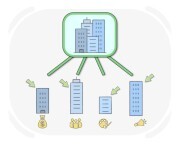
Ex: She received a high mark for her excellent essay. 
Close
Sign in
department

a part of an organization such as a university, government, etc. that deals with a particular task

Ex: He's applying for a job in the legal department of that firm. 
Close
Sign in
observation

the process or action of carefully watching a thing or person, often for learning something about them

Ex: The scientist recorded her findings during the observation. 
Close
Sign in
to self-report

to freely provide information about oneself, often related to personal experiences, behaviors, etc.

Ex: Participants in a research study may be asked to self-report their daily activities or feelings. 
Close
Sign in
in (this|that) case
in this case
[Adverb]

used to refer to a specific situation or scenario being discussed

Ex: If the train is delayed, in that case, we might miss the meeting. 
Close
Sign in
ethical
ethical
[Adjective]

sticking to principles of right and wrong conduct and moral standards
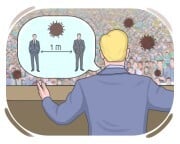
Ex: The ethical treatment of animals is a priority for many. 
Close
Sign in
guideline
guideline
[noun]

a principle or instruction based on which a person should behave or act in a particular situation

Ex: The company's dress code guidelines specify business casual attire for all employees. 
Close
Sign in
regulation

a rule made by the government, an authority, etc. to control or govern something within a particular area

Ex: The new regulations require all vehicles to undergo emissions testing annually. 
Close
Sign in
section
section
[noun]

each of the parts into which a place or object is divided

Ex: The library is organized into several sections, including fiction, non-fiction, and reference materials. 
Close
Sign in
correlation

a mutual relationship between things, where one tends to influence the other

Ex: The correlation between screen time and attention span is still debated. 
Close
Sign in
variable
variable
[noun]

something that is subject to change and can affect the result of a situation

Ex: In the experiment, temperature was a variable that could influence the outcome. 
Close
Sign in
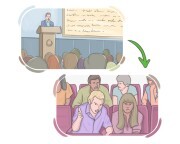
to present

to deliver a speech or presentation that publicly expresses one's ideas, plans, etc.
Ex: The student will present her thesis project to the faculty committee for evaluation. 
Close
Sign in
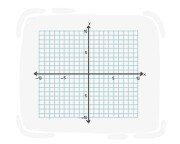
graph
graph
[noun]

a visual representation of the relationship between quantities, shown as points plotted relative to axes

Ex: The teacher drew a graph to show the students' test scores. 
Close
Sign in
to evaluate

to calculate or judge the quality, value, significance, or effectiveness of something or someone

Ex: The teacher evaluates students' performance through tests and assignments. 
Close
Sign in
straightforward
straightforward
[Adjective]

easy to comprehend or perform without any difficulties
Ex: His explanation of the problem was straightforward, making it easy for everyone to understand. 
Close
Sign in
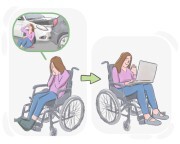
to cope
to cope
[Verb]

to handle a difficult situation and deal with it successfully

Ex: She copes with work pressure by prioritizing tasks and maintaining a positive mindset. 
Close
Sign in
due to
due to
[preposition]

as a result of a specific cause or reason
Ex: The flight delay was due to heavy fog at the airport. 
Close
Sign in
controversial
controversial
[Adjective]

causing a lot of strong public disagreement or discussion

Ex: The politician's controversial statements about immigration sparked heated discussions among voters. 
Close
Sign in
faulty
faulty
[Adjective]

not functioning correctly or failing to meet proper standards

Ex: His conclusion was based on faulty assumptions. 
Close
Sign in
LanGeek
Download LanGeek app