
Cambridge IELTS 16 - Academic - Test 2 - Reading - Passage 3 (2)
Learn vocabulary from the second part of Cambridge IELTS 16 Academic, Test 2 Reading Passage 3, with useful words and expressions from the text.
Review
Flashcards
Forms
Spelling
Quiz

the stage or point of highest quality, activity, success, etc.

relating to the production, distribution, and management of wealth and resources within a society or country
a hard time in a country's economy characterized by a reduction in employment, production, and trade

to successfully complete a course of study at a university, college, or school and receive a degree or diploma

to contemplate or think deeply about something for insight or understanding
the likelihood or possibility of something becoming successful in the future
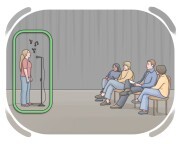
a person who takes part in an activity, event, or process
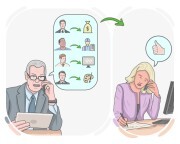
to give someone a particular task, duty, or responsibility to perform
to demonstrate a particular quality, feeling, skill, etc.
a group in an experiment or study that does not receive the treatment or intervention being tested
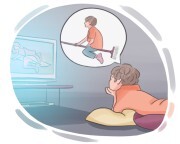
to form a mental image or picture of something

tension or opposition between two simultaneous, incompatible feelings
a person who does not belong to or is not involved in a particular group, organization, community, or place

an event or happening, especially a violent, unusual or important one
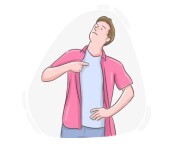
thinking only about oneself, not about other people's needs or desires
(psychology) the conscious part of the mind that mediates between the unconscious and the reality which gives one a sense of self
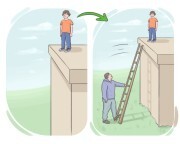
to give someone or something the means or ability to do something
the overall view or perspective of a situation, rather than focusing on small details
involving ideas rather than physical objects or experiences
a willingness to consider or accept new ideas, experiences, or influences
a natural tendency to be friendly and cooperative

an opinion that is formed after thinking carefully
relating to feelings or emotions

the result or consequence of a situation, event, or action
to make a counterattack or respond in a similar manner
an idea or belief that one thinks is true without having a proof

a principle or idea that is abstract
the essential qualities or characteristics by which something is recognized
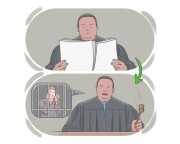
to develop something using certain facts, ideas, situations, etc.
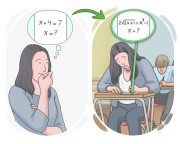
to regard something or someone as smaller or less important than they really are
a subdivision of a larger system or concept
the particular characteristics that are considered when evaluating something
the conditions or factors that surround and influence a particular situation
a defining or distinctive feature of something
to be faced with an unexpected difficulty during a process

to try to complete or do something difficult
causing a lot of strong public disagreement or discussion
an advantage or a helpful effect that is the result of a situation
suggested or advised because it is considered good or suitable
to introduce or create laws or policies
a specific extent on a scale that represents the intensity, amount, or level of something
in relation to or concerning someone or something
the point or degree to which something extends
![to [take] {sth} into account](https://cdn.langeek.co/photo/42092/thumb/350?type=jpeg "to [take] {sth} into account")
to consider something when trying to make a judgment or decision
a usually limited change that makes something different without completely transforming it

to think about someone or something in a specified way
in a sequential manner, referring to actions or events occurring in a specific order
he quality of not being too proud or boastful about one's abilities or achievements, and not drawing too much attention to oneself
the quality of being just or reasonable in treating people and situations
the state of being affected by facts and statistics instead of personal opinions and feelings
lacking interest or emotional involvement
to be likely to develop or occur in a certain way because that is the usual pattern
the act of shifting focus or importance away from a central person, idea, or position to highlight other parts or viewpoints
