Essential Vocabulary for the GRE - All About Literature

Here you will learn some English words about literature, such as "novella", "limerick", "depict", etc. that are needed for the GRE exam.

review-disable

review

flashcard-disable

flashcard

spelling-disable

spelling

quiz-disable

quiz

start-learning
Essential Vocabulary for the GRE
novella [noun]

a work of fiction with an intermediate length, which could be considered a short novel

Ex: He spent months writing a novella to capture the essence of his complex plot .
epic [noun]

a long poem in narrative form giving an account of the extraordinary deeds and adventures of a nation's heroes or legends

Ex: The film adaptation captured the grandeur of the medieval epic .

a historical account of events presented in chronological order

Ex: She read a chronicle of the city ’s development over the last century .
ode [noun]

a lyric poem, written in varied or irregular metrical form, for a particular object, person, or concept

Ex: The classical musician performed a musical rendition of the famous ode .
parody [noun]

a piece of writing, music, etc. that imitates the style of someone else in a humorous way

Ex: The film was a parody of superhero movies , poking fun at the genre 's clichés and over-the-top action scenes .
fable [noun]

a short story on morality with animal characters

Ex: The fable of " The Lion and the Mouse " illustrates the importance of kindness and reciprocity , no matter one 's size or stature .
parable [noun]

a short, simple story that teaches a moral lesson

Ex:
haiku [noun]

a Japanese poem with three unrhymed lines that have five, seven and five syllables each

Ex: Students learned to compose a haiku during their literature class .
epigram [noun]

a short poem or phrase that expresses a single thought satirically, often ending in a clever or humorous way

Ex: The poet 's epigram cleverly highlighted the absurdity of the political situation .
saga [noun]

a long story of heroic actions and bravery in old Norse or Icelandic in the Middle Ages, or a modern narrative resembling such a narrative

Ex: He read a saga about a legendary Icelandic warrior who conquered vast lands .
epigraph [noun]

a quotation or phrase placed at the beginning of a book, chapter, or other written work, often to suggest a theme or context

Ex: The chapter 's epigraph hinted at the conflict to come .
limerick [noun]

a humorous poem of five anapestic lines with a rhyme scheme of AABBA

Ex: The children giggled at the silly limerick read by their teacher .
lyricism [noun]

the creative and imaginative expression of powerful feelings in art, poetry, music, etc.

Ex: The novel 's lyricism captured the beauty and pain of love .
prose [noun]

spoken or written language in its usual form, in contrast to poetry

Ex: The professor 's lectures were known for their eloquent prose , captivating students with their rich language and depth of insight .
oeuvre [noun]

the collection of artistic or literary works produced by a particular painter, author, etc.

Ex: Critics often compare his latest film to his earlier works , examining how it fits within his broader oeuvre .
motif [noun]

a subject, idea, or phrase that is repeatedly used in a literary work

Ex: Through the motif of the " fall from grace , " the author explores the consequences of hubris and the fragility of human ambition .

the way in which characters in a movie, book, etc. are created and represented by a writer
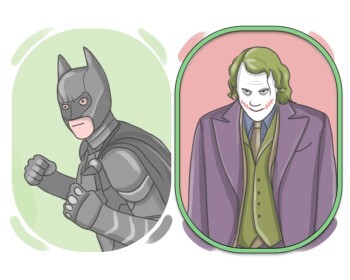
Ex: The film director used subtle visual cues and nuanced performances to achieve rich characterization in the movie , allowing viewers to connect with the characters on a deeper level .

villainous character who strongly opposes another person or thing
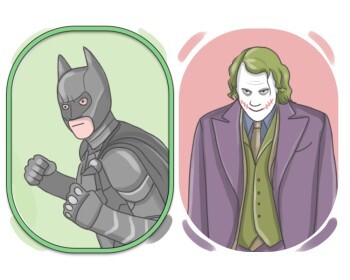
Ex: The antagonist 's motivations were complex , driven by a deep-seated desire for power and revenge against the protagonist .

the main character in a movie, novel, TV show, etc.
Ex: The protagonist 's internal conflict drives the narrative forward as they grapple with difficult choices and confront their own flaws and insecurities .

to make a book, play, etc. short by omitting the details and including the main parts

Ex: The team was abridging the manuscript when the deadline was moved up .

to describe a specific subject, scene, person, etc.

Ex: The film was depicting life in the 18th century when the power went out .
addendum [noun]

a section of additional material that is usually added at the end of a book

Ex: The addendum corrected a minor error found in the main text of the book .
foreword [noun]

a short introductory section at the beginning of a book, usually written by someone other than the author

Ex: The foreword provided insights into the author 's inspiration for the novel .

a part at the end of a book including some final words that may not be written by the author
Ex: The afterword included a brief history of the book 's publication journey .
stanza [noun]

a series of lines in a poem, usually with recurring rhyme scheme and meter
Ex: She analyzed the stanza to understand its symbolic meaning .
verse [noun]

a set of words that usually have a rhythmic pattern

Ex: Memorizing a favorite verse can provide comfort during difficult times , serving as a source of inspiration and strength .
sonnet [noun]

a verse of Italian origin that has 14 lines, usually in an iambic pentameter and a prescribed rhyme scheme

Ex: The poet recited a classic sonnet by Shakespeare during the literary evening .
gripping [adjective]

exciting and intriguing in a way that attracts one's attention

Ex:
concise [adjective]

giving a lot of information briefly and clearly

Ex:
canonical [adjective]

(of an author or literary work) accepted as highly acclaimed authors or pieces of literature, which are collectively referred to as the literary canon

Ex: Critics debated whether the new author 's groundbreaking novel would eventually be recognized as part of the literary canon and achieve canonical status .
flowery [adjective]

(of writing or speech) full of literary or complicated words and phrases

Ex:
mannered [adjective]

behaving in an artificial way that is too formal, trying to impress others

Ex: She found his mannered behavior at the party to be quite pretentious .
raunchy [adjective]

sexually explicit or morally obscene

Ex:
highbrow [adjective]

scholarly and highly interested in cultural or artistic matters
Ex:
sequel [noun]

a book, movie, play, etc. that continues and extends the story of an earlier one

Ex: The sequel picked up right where the first book left off , continuing the protagonist 's journey with new challenges and adventures .
codex [noun]

an ancient book, written by hand, especially of scriptures, classics, etc.

Ex: The codex was carefully preserved in a climate-controlled vault to prevent further deterioration of its delicate parchment pages .

an author whose work is published under someone else's name

Ex: The ghostwriter received credit in the acknowledgments section of the book .
humorist [noun]

someone who is known for writing or telling humorous stories or jokes about real people and events

Ex: The humorist ’s show cleverly critiqued the latest fashion trends with biting humor .

a playwright who writes tragedies

Ex: She aspired to become a tragedian and wrote several plays about human suffering .

a male literary author or scholar

Ex: The lecture was delivered by a distinguished man of letters from Oxford .
satirist [noun]

a person who writes or uses satires in order to criticize or humor someone or something

Ex: Many consider Jonathan Swift a master satirist for his work " Gulliver 's Travels . "