pattern

Essential Vocabulary for the GRE - The World of Music

Here you will learn some English words about music, such as "acoustic", "duet", "measure", etc. that are needed for the GRE exam.

Review

Flashcards

Spelling

Quiz

Start learning
Essential Words Needed for the GRE
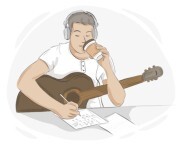
composition

the act or process of creating written works, such as essays, poems, or music

Ex: She devoted the afternoon to the composition of her novel. 
Close
Sign in
ballad
ballad
[noun]

a tale that is narrated in the form of a song or poem

Ex: The troubadours of medieval Europe traveled from town to town, singing ballads of love and chivalry. 
Close
Sign in
adagio
adagio
[noun]

a movement or composition intended to be played at a slow tempo
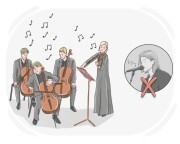
Ex: The adagio in the opera highlighted the soprano's lyrical voice. 
Close
Sign in
instrumental
instrumental
[Adjective]

(of music) made only by instruments and without vocals
Ex: The instrumental piece featured a beautiful piano melody accompanied by strings. 
Close
Sign in
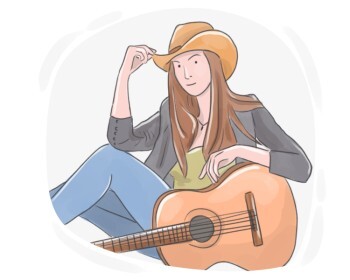
acoustic
acoustic
[Adjective]

(of a musical instrument) making a sound that is natural, not amplified

Ex: She preferred the acoustic guitar for its warm, natural tone. 
Close
Sign in
harmonic
harmonic
[Adjective]

having blended sounds or tones that combine in a pleasing way

Ex: The choir produced a harmonic blend that filled the concert hall with rich, beautiful sounds. 
Close
Sign in
melodic
melodic
[Adjective]

having a tuneful, harmonious quality or arrangement of sounds

Ex: She composed a melodic tune that captivated listeners with its soothing rhythm. 
Close
Sign in
ambient
ambient
[Adjective]

relating to the type of music that emphasizes on tone and atmosphere rather than traditional structure
Ex: The ambient music played softly in the background, creating a calming atmosphere. 
Close
Sign in
avant-garde
avant-garde
[Adjective]

innovative, experimental, or unconventional in style or approach, especially in the arts

Ex: The avant-garde filmmaker pushed the boundaries of narrative structure, crafting abstract, non-linear stories that challenged viewers' perceptions of cinema. 
Close
Sign in
indie
indie
[Adjective]

(of a musical band) not associated with major labels or companies

Ex: Her favorite indie artists often played at small, intimate venues around the city. 
Close
Sign in
solo
solo
[noun]

a musical piece written for one singer or instrument
Ex: The pianist played a beautiful solo during the concert. 
Close
Sign in
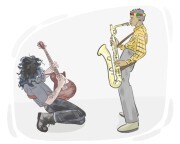
duet
duet
[noun]

a piece of music written for two performers

Ex: The pianist and violinist performed a beautiful duet at the concert. 
Close
Sign in
baritone
baritone
[noun]

a male singing voice that is classified between bass and tenor, characterized by a lower and richer tone
Close
Sign in
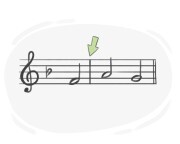
bar line
bar line
[noun]

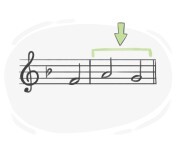
an upright line that separates the bars in written music
Ex: The composer drew a bar line to mark the end of each measure. 
Close
Sign in
movement
movement
[noun]

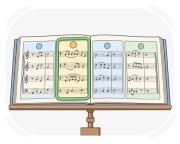
one of the main parts that a long musical work is divided into, having its own structure
Ex: The symphony consisted of four movements, each showcasing different themes and moods. 
Close
Sign in
chord
chord
[noun]

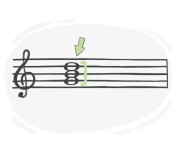
three or more musical notes that form a harmony when played together
Ex: The guitarist strummed a G major chord to start the song. 
Close
Sign in
measure
measure
[noun]

any of the short sections consisting of musical beats located between two consecutive lines
Ex: The conductor paused to correct the musicians' timing in the third measure. 
Close
Sign in
scale
scale
[noun]

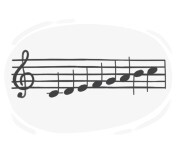
an arrangement of a series of musical notes with specified intervals, in ascending or descending pitch order

Ex: The C major scale consists of seven notes, starting with C and following a specific pattern of intervals. 
Close
Sign in
encore
encore
[noun]

an additional or repeated piece that is performed at the end of a concert, because the audience has asked for it

Ex: The crowd cheered for an encore after the band's final song. 
Close
Sign in
discord
discord
[noun]

an unusual combination of musical notes that sound strange when played

Ex: The sudden discord in the symphony startled the audience. 
Close
Sign in
dissonance

a combination of notes or chords that sounds harsh or unstable

Ex: The composer used dissonance to create tension in the piece. 
Close
Sign in
coda
coda
[noun]

the final passage of an extended musical composition
Ex: The symphony concluded with a powerful coda, bringing the piece to a dramatic and satisfying close. 
Close
Sign in
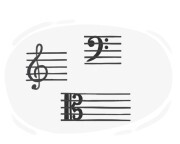
clef
clef
[noun]

any of the signs written on the left-hand end of a staff indicating the pitch of the notes

Ex: The sheet music was marked with a treble clef at the beginning of the staff, indicating that it was intended for higher-pitched instruments or voices. 
Close
Sign in
concerto
concerto
[noun]

a musical composition that is written for one or more solo instruments and accompanied by an orchestra with three movements

Ex: The orchestra performed a beautiful concerto by Mozart, featuring a talented soloist on the piano. 
Close
Sign in
opus
opus
[noun]

a musical piece or collection that is written by a famous composer followed by the date in which it was created

Ex: Rachmaninoff's "Piano Concerto No. 2, Opus 18" was completed in 1901. 
Close
Sign in
discography

all of the records or a list of the records that have been created by a particular singer, composer or musical band

Ex: The band's discography includes five studio albums and several live recordings. 
Close
Sign in
compilation

something such as a book, record, etc. that consists of different pieces taken from several sources

Ex: The album is a compilation of the band's greatest hits. 
Close
Sign in
etude
etude
[noun]

an instrumental composition that is usually short and is intended for practice or demonstration of a skill
Ex: The pianist practiced a challenging etude to improve her technical skills. 
Close
Sign in
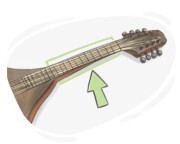
fingerboard

a narrow flat part on the neck of a string instrument where the fingers press the strings to play various notes
Ex: The guitarist's hand moved swiftly along the fingerboard during the solo. 
Close
Sign in
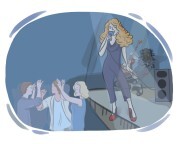
to headline

to be the star performer in a concert or performance

Ex: She will headline the music festival this summer, drawing a huge crowd. 
Close
Sign in
to improvise

to create and perform words of a play, music, etc. on impulse and without preparation, particularly because one is forced to do so
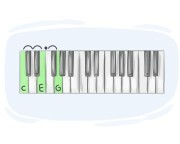
Ex: When the actor forgot his lines, he had to improvise to keep the scene going. 
Close
Sign in
major
major
[Adjective]

based on a scale in which the interval between the third and the fourth notes and the seventh and the eighth notes is a half step
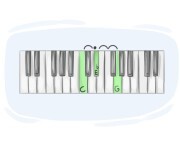
Ex: The piece was composed in a bright and uplifting major key. 
Close
Sign in
minor
minor
[Adjective]

based on a scale in which the interval between the second and the third notes, the fifth and the sixth notes and the seventh and eighth notes is a half step

Ex: The piece was written in a minor key, giving it a melancholic tone. 
Close
Sign in
interval
interval
[noun]

a dissimilarity in pitch between two notes
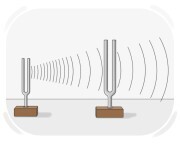
Ex: The interval between the notes C and E is a major third. 
Close
Sign in
pitch
pitch
[noun]

the degree of highness or lowness of a tone that is determined by the frequency of waves producing it

Ex: She adjusted the pitch of her voice to match the melody of the song perfectly. 
Close
Sign in
tempo
tempo
[noun]

the speed that a piece of music is or should be played at
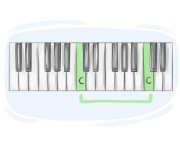
Ex: The conductor adjusted the tempo to match the mood of the piece. 
Close
Sign in
octave
octave
[noun]

the interval between the first and the last notes in eight diatonic degrees

Ex: The pianist played a scale that spanned a full octave. 
Close
Sign in
to pluck
to pluck
[Verb]

to play a string instrument, such as a guitar, using the fingers or a plectrum

Ex: The musician plucked the strings of the guitar softly, creating a soothing melody. 
Close
Sign in
monophonic
monophonic
[Adjective]

describing sound transmission, recording or reproduction that is transferred through a single channel

Ex: The old radio played monophonic sound, lacking the depth and directionality of modern stereo systems. 
Close
Sign in
refrain
refrain
[noun]

a repeated line or phrase in a poem or song, typically at the end of each stanza or verse

Ex: The song's catchy refrain stayed in my head all day. 
Close
Sign in
LanGeek
Download LanGeek app