
pattern

Essential Vocabulary for the GRE - Making Decisions

Here you will learn some English words about decision, such as "veto", "grudge", "finicky", etc. that are needed for the GRE exam.

Review

Flashcards

Forms

Spelling

Quiz

Start learning
Essential Words Needed for the GRE
accountability

the fact of being responsible for what someone does and being able to explain the reasons

Ex: The manager emphasized the importance of accountability in the workplace. 
Close
Sign in
acquittal
acquittal
[noun]

an official judgment in court of law that declares someone not guilty of the crime they were charged with

Ex: The defendant was relieved to receive an acquittal after a lengthy trial, as the jury found them not guilty of all charges. 
Close
Sign in
adjudicator

someone who makes a formal decision about who is right in an argument or dispute

Ex: The adjudicator carefully reviewed the evidence before making a final ruling. 
Close
Sign in
volition
volition
[noun]

the faculty to use free will and make decisions

Ex: She chose to pursue a career in art of her own volition, following her passion rather than external pressures. 
Close
Sign in
veto
veto
[noun]

a vote or formal decision that prevents a proposal or measure from being approved

Ex: The council used its veto to block the new zoning law. 
Close
Sign in
verdict
verdict
[noun]

an opinion given or a decision made after much consideration

Ex: After much deliberation, the team reached a verdict on the best course of action. 
Close
Sign in
partiality

an unfair prejudice or bias toward an individual, group of people, etc.

Ex: The judge was criticized for showing partiality during the trial. 
Close
Sign in
leaning
leaning
[noun]

a tendency to believe in or favor something

Ex: She has a strong leaning towards progressive policies. 
Close
Sign in
grudge
grudge
[noun]

a deep feeling of anger and dislike toward someone because of what they did in the past

Ex: She still held a grudge against her colleague for taking credit for her work. 
Close
Sign in
free will
free will
[noun]

the idea that human beings have the agency to decide independently without being controlled by any outside influences
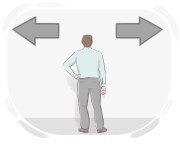
Ex: She believes in free will and makes decisions based on her own values. 
Close
Sign in
dilemma
dilemma
[noun]

a situation that is difficult because a choice must be made between two or more options that are equally important

Ex: She faced a dilemma when she had to choose between attending her best friend's wedding and a critical work presentation. 
Close
Sign in
to deliberate

to think carefully about something and consider it before making a decision
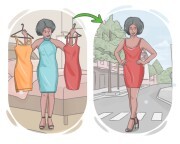
Ex: Before accepting the job offer, she took time to deliberate the pros and cons. 
Close
Sign in
to settle on

to decide something, after considering all possible alternatives
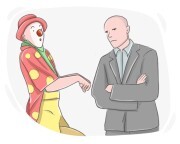
Ex: After much deliberation, she settled on a color for the living room walls. 
Close
Sign in
to take against

to start to dislike someone or something

Ex: I don't know why, but she seemed to take against me from the moment we met. 
Close
Sign in
unanimous
unanimous
[Adjective]

(of a group) fully in agreement on something

Ex: The committee was unanimous in approving the new budget. 
Close
Sign in
to think over

to consider a matter carefully before reaching a decision

Ex: I will think the job offer over during the weekend. 
Close
Sign in
to put off

to postpone an appointment or arrangement
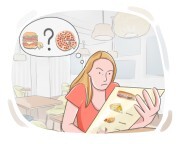
Ex: We had to put off the meeting because of the storm. 
Close
Sign in
indecisive
indecisive
[Adjective]

(of a person) having difficulty making choices or decisions, often due to fear, lack of confidence, or overthinking

Ex: She's so indecisive that it takes her hours to choose what to wear each morning. 
Close
Sign in
incisive
incisive
[Adjective]

capable of quickly grasping complex topics and offer clear and insightful perspectives

Ex: His incisive vision allows him to see beyond the surface, uncovering deeper meanings and unveiling hidden truths. 
Close
Sign in
finicky
finicky
[Adjective]

(of a person) overly particular about small details, making one challenging to please
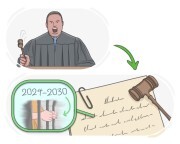
Ex: The finicky eater refused to eat anything that wasn't prepared exactly to their liking. 
Close
Sign in
to stipulate

to specify that something needs to be done or how it should be done, especially as part of an agreement

Ex: The contract stipulates that the payment must be made within 30 days of the invoice date. 
Close
Sign in
rigorous
rigorous
[Adjective]

(of a rule, process, etc.) strictly followed or applied

Ex: The school has a rigorous dress code that all students must follow. 
Close
Sign in
adherence
adherence
[noun]

the fact of complying with a command, order, impulse, etc. or following someone's rules and beliefs

Ex: Her strict adherence to the company's policies earned her a promotion. 
Close
Sign in
prerequisite

something that is required as a precondition for something else following
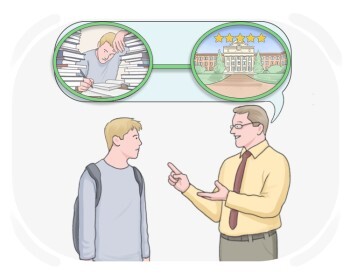
Ex: A bachelor's degree is a prerequisite for admission to the master's program. 
Close
Sign in
advisory
advisory
[Adjective]

aiming to provide advice and suggestions

Ex: The government issued a travel advisory warning citizens about potential risks in certain regions. 
Close
Sign in
to act on
to act on
[Verb]

to adjust one's actions or behavior based on specific information, ideas, or advice

Ex: He chose to act on the financial advisor's recommendations to save for retirement. 
Close
Sign in
to commend

to speak positively about someone or something and suggest their suitability
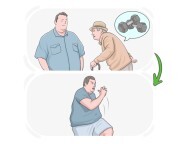
Ex: The doctor commended the new treatment to her patients for its effectiveness in managing chronic pain. 
Close
Sign in
to heed
to heed
[Verb]

to be attentive to advice or a warning
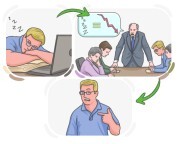
Ex: It's important to heed the advice of experienced hikers when trekking in unfamiliar terrain. 
Close
Sign in
to insinuate

to suggest something in an indirect manner

Ex: During the discussion, she insinuated that her colleague was taking credit for her ideas without directly accusing him. 
Close
Sign in
to indicate

to show, point out, or suggest the existence, presence, or nature of something

Ex: The thermometer indicates that the temperature is rising. 
Close
Sign in
implicit
implicit
[Adjective]

suggesting something without directly stating it

Ex: His implicit approval was evident from the nod of his head. 
Close
Sign in
inadvisable
inadvisable
[Adjective]

not recommended to do based on the particular situation

Ex: Accepting that job offer would be inadvisable since you've only just started your current role. 
Close
Sign in
to postulate

to suggest or assume the existence or truth of something as a basis for reasoning, discussion, or belief
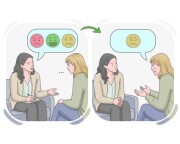
Ex: Philosophers often postulate hypothetical scenarios to explore the limits of moral reasoning. 
Close
Sign in
to prompt
to prompt
[Verb]

to encourage someone to do or say something

Ex: The teacher used thought-provoking questions to prompt students to participate actively in class discussions. 
Close
Sign in
to propound

to put an idea, proposition, theory, etc. forward for further consideration
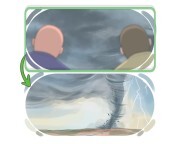
Ex: The scientist propounded a new theory to explain the phenomenon observed in the experiment. 
Close
Sign in
to prefigure

to perceive something as a sign that indicates the occurrence of something good or evil

Ex: The sudden appearance of black cats was believed to prefigure bad luck in the old superstitions. 
Close
Sign in
LanGeek
Download LanGeek app
