pattern

Vocabulary for IELTS (Academic) - Mathematics and Statistics

Here you will learn some English words about cause and effect, such as "deduction", "vertical", "segment", etc. that are needed for the IELTS exam.

Review

Flashcards

Forms

Spelling

Quiz

Start learning
Words for Academic IELTS
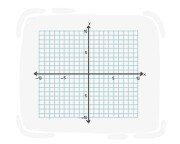
graph
graph
[noun]

a visual representation of the relationship between quantities, shown as points plotted relative to axes

Ex: The graph revealed a steady increase over time .
Close
Sign in
sign
sign
[noun]

the property of a number indicating whether it is positive or negative, excluding zero
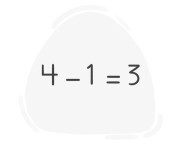
Ex: Determining the sign of a number is essential in calculations .
Close
Sign in
deduction
deduction
[noun]

the action or process of taking an amount away from a total

Ex: In a budget , a deduction shows expenses taken away from the total income .
Close
Sign in
mathematically

in accordance with mathematical rules

Ex: The trajectory of the projectile was calculated mathematically, considering factors such as velocity and angle .
Close
Sign in
mathematician

someone who is a specialist or expert in mathematics
Ex: The mathematician used a computer program to analyze the data more quickly.
Close
Sign in
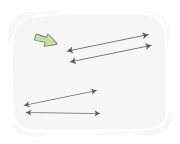
parallel
parallel
[Adjective]

having an equal distance from each other at every point

Ex: The railroad tracks are parallel to each other .
Close
Sign in
probability

(mathematics) a number representing the chances of something specific happening
Ex: The probability of rolling a six on a fair die is one out of six .
Close
Sign in
problem
problem
[noun]

a question that can be answered by mathematics or logical thinking

Ex: This math problem seems hard , but I think I can solve it .
Close
Sign in
scale
scale
[noun]

the size, amount, or degree of one thing compared with another
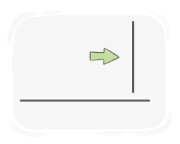
Ex: We need to assess the scale of the problem before deciding on a suitable solution .
Close
Sign in
square
square
[noun]

the second exponent of any given number produced when multiplied by itself

Close
Sign in
vertical
vertical
[Adjective]

positioned at a right angle to the horizon or ground, typically moving up or down
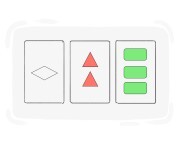
Ex: The graph displayed the data with vertical bars representing each category .
Close
Sign in
set
set
[noun]

(mathematics) a group of things that belong together because of having some similarities
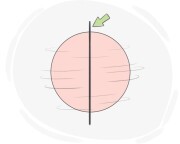
Ex: The teacher introduced the concept of a set during the math lesson .
Close
Sign in
axis
axis
[noun]

the central point or line around which an object turns

Ex: The sculpture slowly revolved on its central axis.
Close
Sign in
bracket
bracket
[noun]

each of the two symbols [ ] used to indicate that the enclosed numbers or words should be considered separately

Ex: In sports tournaments , brackets [ ] are used to display match-ups and progressions of teams or players throughout the competition .
Close
Sign in
equation
equation
[noun]

(mathematics) a statement indicating the equality between two values

Ex: Economists analyze supply and demand equations to forecast market trends and price changes .
Close
Sign in
to deduce
to deduce
[Verb]

to determine by a process of logical reasoning

Ex: Mathematicians use logical rules to deduce theorems from established axioms .
Close
Sign in
formula
formula
[noun]

(mathematics) a rule or law represented in symbols, letters, or numbers

Ex: Physicians apply medical formulas to determine appropriate dosages of medications based on patient weight and condition .
Close
Sign in
function
function
[noun]

(mathematics) a quantity whose value changes according to another quantity's varying value

Ex: Statisticians analyze data using functions such as mean , median , and standard deviation to understand distributions and trends .
Close
Sign in
ratio
ratio
[noun]

the result of dividing one number, quantity, or expression by another

Ex: The student explained the ratio in the equation .
Close
Sign in
segment
segment
[noun]

(geometry) a part of a circle that is separated from the rest by a line
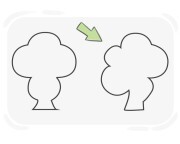
Ex: The segment of the circle containing the arc between points A and B is known as arc AB .
Close
Sign in
asymmetric
asymmetric
[Adjective]

not having identical parts facing each other or around an axis

Ex: The asymmetric layout of the garden incorporated winding paths and varied plantings for a naturalistic feel .
Close
Sign in
induction
induction
[noun]

the process of deriving a general principle from specific observations or instances
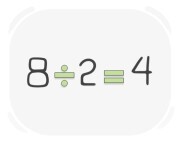
Ex: Teachers often encourage students to learn mathematics through induction.
Close
Sign in
to divide
to divide
[Verb]

(mathematics) to calculate how many times a number contains another number
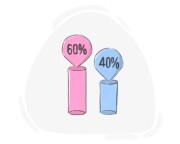
Ex: Dividing a number by itself equals 1 .
Close
Sign in
percentage

a number or amount expressed as a fraction of 100
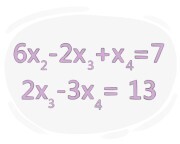
Ex: The company aims to reduce its carbon emissions by a significant percentage over the next five years .
Close
Sign in
algebra
algebra
[noun]

a branch of mathematics in which abstract letters and symbols represent numbers in order to generalize the arithmetic
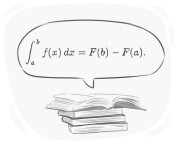
Ex: Many real-world problems can be solved using algebraic equations and formulas.
Close
Sign in
calculus
calculus
[noun]

the branch of mathematics that comprises differentials and integrals

Ex: Differential equations are a key topic within calculus.
Close
Sign in
geometry
geometry
[noun]

the branch of mathematics that deals with the relation between the lines, angles and surfaces or the properties of the space
Ex: Ancient civilizations like the Greeks advanced the study of geometry.
Close
Sign in
arithmetic

a branch of mathematics that deals with addition, subtraction, multiplication, etc.
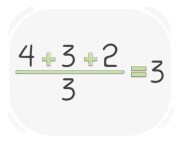
Ex: He struggled with arithmetic in elementary school but improved with extra practice.
Close
Sign in
mean
mean
[noun]

(mathematics) the average value of a set of quantities calculated by adding them, and dividing them by the total number of the quantities

Ex: The mean of the test results was used to assess overall student achievement .
Close
Sign in
variable
variable
[noun]

(mathematics) a quantity that is capable of assuming different values in a calculation

Ex: In statistical analysis , variables can be classified as independent or dependent , depending on their role in the study .
Close
Sign in
normal distribution

a function that shows the probability of variables in a symmetrical and bell-shaped graph

Close
Sign in
correlation coefficient

(statistics) a measure used to show how strong is the relationship between two sets of data or variables

Close
Sign in
dependent variable

(statistics) a variable whose value is determined by the value of another variable in a function

Close
Sign in
LanGeek
Download LanGeek app