
Vocabulary for IELTS (Academic) - Politics
Here you will learn some English words about politics, such as "congress", "federal", "ballot", etc. that are needed for the IELTS exam.
Review
Flashcards
Spelling
Quiz

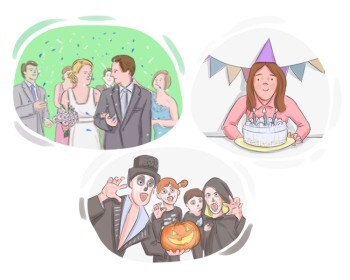

a new law that is proposed to a parliament to be discussed about
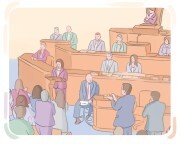
the legislative body of the United States, consisting of the Senate and the House of Representatives

a person who aligns with or supports the principles and policies traditionally associated with conservative political ideologies

a group of elected people who govern a city, town, etc.

to formally discuss a matter, usually in a structured setting

a form of government where the power is vested in the hands of the people, either directly or through elected representatives
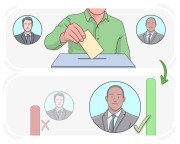
to choose a person for a specific job, particularly a political one, by voting

relating to the central government of a country rather than the local or regional governments
to regulate or control a person, course of action or event or the way something happens

a person who tries to bring about political or social change, especially someone who supports strong actions such as protests, etc.
the principle or system of unlimited and unchecked governmental power

a formal agreement or treaty establishing cooperation between nations or groups for shared objectives
a senior official whose job is living in a foreign country and representing their own country
(of a country, region, etc.) the state of being independent and free from external control
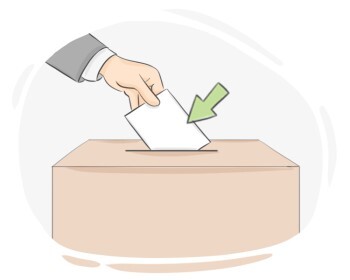
a document listing the options or candidates used in voting
concerning two groups or countries
the situation in which a group of countries have enough military or political power to prevent a country from controlling other countries
a specific section within a government department which is responsible for specific tasks, functions, etc.
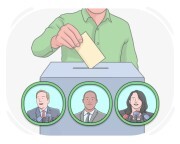
the state of being a candidate in an election
an economic and political system in which industry, businesses, and properties belong to the private sector rather than the government

the job, skill, or act of managing the relationships between different countries
the official laws and principles by which a country or state is governed

a union of 27 European states that is formed to strengthen the economic and political bonds between its members
an overenthusiastic individual, especially one who is devoted to a radical political or religious cause
based on or relating to a specific set of political or economic views or policies
the state of being free from the control of others
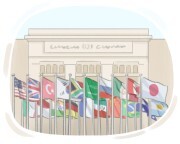
in a way that relates to multiple nations or the entire world
a belief in which the actions of one country affect all other countries in the world and that economic policy is built on benefiting the whole world not an individual country
a social class that its members have a high socioeconomic status and are between the middle and upper classes
a system that allows a limited number of immigrants to officially enter a country annually
the illegal practice of forcing the asylum seekers or the refugees to return to the country where they are at risk of prosecution
the state of an organization or country that is lacking in order, authority, or control
a session that each US Senate committee holds in order to determine whether a candidate should be confirmed or rejected for a high federal office
