Vocabulary for IELTS (Academic) - Biology

Here you will learn some English words about biology, such as "cycle", "gene", "fertile", etc. that are needed for the IELTS exam.

review-disable

review

flashcard-disable

flashcard

spelling-disable

spelling

quiz-disable

quiz

start-learning
Vocabulary for IELTS (Academic)
biology [noun]

the scientific study of living organisms; the science that studies living organisms

Ex: His biology professor was renowned for research in genetic engineering .

(biology) a person who studies the science that deals with living organisms
Ex: The biologist presented her findings on the impact of climate change on local plant species at the conference .
cycle [noun]

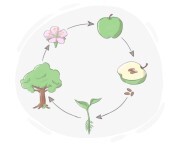
(biology) a series of transformations and events that happen in an animal or plant's lifetime

Ex: The cell cycle is the process by which cells grow and divide .

to separate people or things into two or more groups, parts, etc.

Ex: Right now , the referee is dividing the teams before the soccer match .
bacteria [noun]

(microbiology) single-celled microorganisms that can be found in various environments, including soil, water, and living organisms, and can be beneficial, harmful, or neutral
Ex: Yogurt contains beneficial bacteria that aid in digestion .
cell [noun]

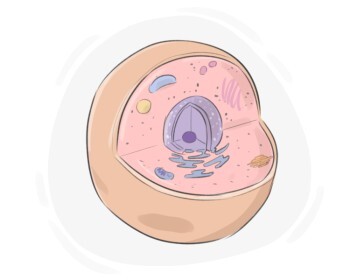
an organism's smallest unit, capable of functioning on its own
Ex: The discovery of cells and the development of cell theory by scientists such as Robert Hooke and Theodor Schwann revolutionized our understanding of living organisms .
DNA [noun]

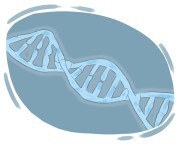
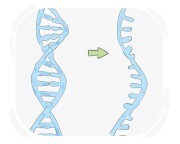
(biochemistry) a chemical substance that carries the genetic information, which is present in every cell and some viruses

Ex: DNA carries the information that determines traits like eye color and height .
biological [adjective]

relating to the science that explores living organisms and their functions
Ex: The biological classification system categorizes organisms into various groups based on their characteristics .

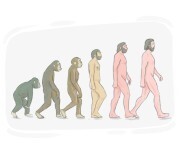
(biology) the slow and gradual development of living things throughout the history of the earth

Ex: The study of evolution helps scientists understand the diversity of life on Earth and how organisms are interconnected through common ancestry .

(biology) to change gradually and over generations into forms that are better adapted to the environment and fitter to survive

Ex: Bacteria exposed to antibiotics have evolved through genetic mutations .
genetic [adjective]

(of diseases) passed on from one's parents

gene [noun]

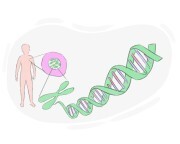
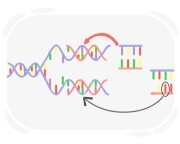
(genetics) a basic unit of heredity and a sequence of nucleotides in DNA that is located on a chromosome in a cell and controls a particular quality

Ex:
genetics [noun]

the branch of biology that deals with how individual features and different characteristics are passed through genes
Ex: The field of genetics continues to evolve with new technologies and discoveries .
germ [noun]

a small living organism that causes disease or infection

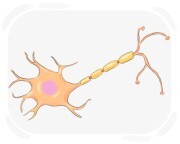
nerve [noun]

each of a group of long thread-like structures in the body that carry messages between the brain and other parts of the body, sensing things is a result of this process

organism [noun]

a living thing such as a plant, animal, etc., especially a very small one that lives on its own
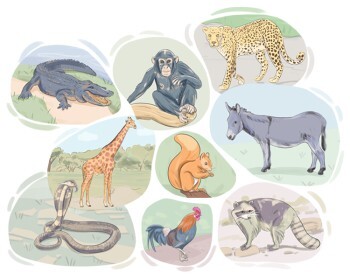
Ex: The rainforest teems with diverse organisms , from insects to mammals .
species [noun]

a group that animals, plants, etc. of the same type which are capable of producing healthy offspring with each other are divided into
Ex: The red wolf is a species of wolf that is native to the southeastern United States .
fertile [adjective]

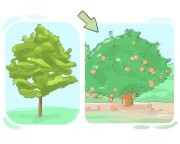
(of an animal, person, or plant) able to produce offspring, fruit, or seed
Ex: The fertile soil allowed the farmers to grow a variety of crops .
mutation [noun]

(biology) a change in the structure of the genes of an individual that causes them to develop different physical features

Ex: Due to a mutation in his genes , the child was born with blue eyes , even though both parents had brown eyes .
organic [adjective]

relating to a carbon-based compound that has a biological origin

Ex: Organic matter in soil contributes to its fertility and supports plant growth .

the chemical processes through which food is changed into energy for the body to use
Ex: The thyroid gland plays a crucial role in regulating metabolism by producing hormones that control metabolic rate .

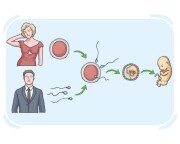
(of a living being) to produce offspring or more of itself

Ex: Humans reproduce through sexual reproduction , leading to the birth of babies .
parasite [noun]

(biology) a small organism that lives on or inside another organism, called a host, and is dependent on it for nutrition and growth
Ex: Malaria is caused by a parasite called Plasmodium , which is transmitted to humans through the bite of an infected Anopheles mosquito .
tissue [noun]

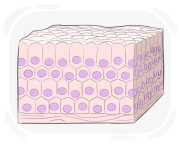
a group of cells in the body of living things, forming their different parts

Ex:
antibody [noun]

a blood protein produced to fight diseases or infections, or in response to foreign substances in the body

Ex: Antibody tests find antibodies in your blood , showing past infections or vaccinations .
dominant [adjective]

(of genes) causing a person to inherit a particular physical feature, even if it is only present in one parent's genome
Ex:

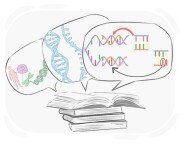
the science or process of deliberately modifying the features of a living organism by changing its genetic information

Ex: Advances in genetic engineering techniques , such as CRISPR-Cas9 , have revolutionized the field by allowing precise editing of DNA sequences .
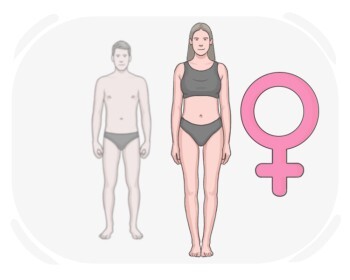
male [adjective]

belonging to the sex that cannot give birth to babies or lay eggs but is capable of fertilization of the opposite sex
Ex: Tim admired the male deer 's antlers , which signified his dominance during mating season .
female [adjective]

belonging to the sex that is fertilized by the opposite sex and can lay eggs or give birth to babies
Ex: Sarah admired the female peacock 's subtle beauty as she watched it perched in the garden .
RNA [noun]

(biochemistry) a chemical substance that carries the information from DNA to control the cellular protein biosynthesis

Ex: Viruses like SARS-CoV-2 use RNA as their genetic material .
virus [noun]

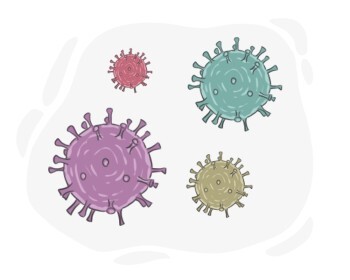
a microscopic agent that causes disease in people, animals, and plants

Ex: The doctor said it was a virus , so antibiotics would n't help .