
pattern

Vocabulary for IELTS Academic (Band 6-7) - Law

Here, you will learn some English words related to Law that are necessary for the Academic IELTS exam.

Review

Flashcards

Forms

Spelling

Quiz

Start learning
Vocabulary for Academic IELTS (6-7)
amendment
amendment
[noun]

a formal change, addition, or alteration made to a law, contract, constitution, or other legal document

Ex: The proposed amendment to the constitution aims to guarantee equal rights for all citizens. 
Close
Sign in
legislation

a formal rule or collection of rules enacted by a governing authority

Ex: The new environmental legislation limits carbon emissions from factories. 
Close
Sign in
decree
decree
[noun]

an official authoritative decision or judgment, especially one made by a government or the ruler of a country

Ex: The king issued a decree establishing a new tax law. 
Close
Sign in
statute
statute
[noun]

an officially written and established law

Ex: The new statute requires all drivers to use hands-free devices while driving. 
Close
Sign in
litigation

the formal procedure of resolving disputes through the court system

Ex: The company is involved in litigation over patent rights. 
Close
Sign in
prosecutor

a legal official who represents the state in criminal proceedings and brings charges against individuals or organizations suspected of breaking the law

Ex: The prosecutor presented strong evidence in the case against the defendant. 
Close
Sign in
attorney
attorney
[noun]

a lawyer who represents someone in a court of law

Ex: The attorney presented a strong case in court on behalf of his client. 
Close
Sign in
solicitor
solicitor
[noun]

(in the UK) a lawyer who is entitled to give legal advice, prepare legal documents for contracts and defend people in lower courts of law

Ex: She consulted a solicitor for advice on buying a house. 
Close
Sign in
plaintiff
plaintiff
[noun]

a person who brings a lawsuit against someone else in a court

Ex: The plaintiff presented compelling evidence to support their case. 
Close
Sign in
defendant
defendant
[noun]

a person in a law court who is sued by someone else or is accused of committing a crime

Ex: The defendant pleaded not guilty to the charges of theft and fraud. 
Close
Sign in
conviction

a formal declaration by which someone is found guilty of a crime in a court of law
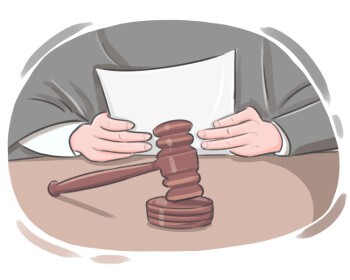
Ex: The defendant's conviction was based on solid evidence presented during the trial. 
Close
Sign in
verdict
verdict
[noun]

an official decision made by the jury in a court after the legal proceedings

Ex: The jury reached an unanimous verdict of guilty after deliberating for several hours. 
Close
Sign in
bail
bail
[noun]

an amount of money that must be paid in order for someone who is accused of a crime to be released until their trial

Ex: The judge set bail at $10,000 for the defendant's release from jail before the trial. 
Close
Sign in
jury duty
jury duty
[noun]

a civic obligation requiring individuals to serve as members of a jury in a court of law

Ex: She was summoned for jury duty and had to report to the courthouse for potential selection. 
Close
Sign in
probation
probation
[noun]

a legal arrangement in which a convicted offender is released under specific conditions instead of serving time in prison
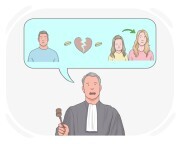
Ex: The judge sentenced him to five years' probation. 
Close
Sign in
custody
custody
[noun]

the legal right or responsibility to care for and make decisions regarding a child, especially after a divorce or separation

Ex: The court awarded full custody to the mother. 
Close
Sign in
clemency
clemency
[noun]

compassion shown by a person in authority, especially by reducing a punishment

Ex: The governor granted clemency to the prisoner, reducing his sentence. 
Close
Sign in
to vindicate

to clear someone from blame or suspicion and prove their innocence
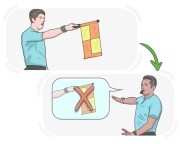
Ex: The new evidence helped to vindicate him of all the charges. 
Close
Sign in
to overrule

to use one's official or political authority to change or reject a previously made decision

Ex: The appellate court decided to overrule the lower court's decision and grant a new trial. 
Close
Sign in
to pass
to pass
[Verb]

to make or accept a law by voting or by decree

Ex: In 1996, Congress unanimously passed the Food Quality Protection Act. 
Close
Sign in
to intervene

to become a party in a lawsuit because of a vested interest in the outcome
Ex: The trade union filed a motion to intervene, asserting that the interests of its members were directly affected by the outcome of the case. 
Close
Sign in
to amend
to amend
[Verb]

to make changes or additions to a document, law, contract, or similar text in order to correct or update it

Ex: The committee decided to amend the proposal to address concerns raised during the discussion. 
Close
Sign in
to prosecute

to try to charge someone officially with a crime in a court as the lawyer of the accuser

Ex: The lawyer was hired to prosecute the case on behalf of the victim’s family. 
Close
Sign in
to acquit
to acquit
[Verb]

to officially decide and declare in a law court that someone is not guilty of a crime
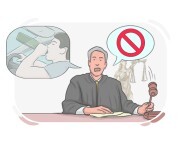
Ex: The company was accused of wrongdoing, but after a thorough investigation, they were acquitted of any illegal activities. 
Close
Sign in
to outlaw
to outlaw
[Verb]

to officially state that something is illegal

Ex: The government decided to outlaw the sale of counterfeit goods to protect consumers. 
Close
Sign in
to validate

to confirm or verify the legality or legitimacy of something, typically a document, contract, or action

Ex: The judge validated the witness's testimony by corroborating it with other evidence presented in the case. 
Close
Sign in
arbitration

a process where parties resolve disputes through a neutral third party

Ex: The construction contract included a clause requiring arbitration to settle any disputes between the contractor and the client. 
Close
Sign in
citation
citation
[noun]

a reference to a specific legal source, like a law or court case, used to support arguments or statements in legal documents and writings

Ex: The attorney provided a citation to a relevant Supreme Court case to support her argument in the brief. 
Close
Sign in
to waive
to waive
[Verb]

to voluntarily relinquish or give up a right, claim, or privilege

Ex: He decided to waive his right to a trial. 
Close
Sign in
LanGeek
Download LanGeek app
