Architecture and Construction - Classical Architecture
Here you will learn some English words related to classical architecture such as "arcade", "mutule", and "arch".
Review
Flashcards
Spelling
Quiz

a round or drum-shaped architectural element that is often used for decorative purposes above doors or windows in buildings, or as a part of a dome
a decorative element consisting of vertical rectangular blocks with three vertical grooves called glyphs
the triangular upper portion of the entrance of a building, often seen in buildings with Classical architecture
the horizontal, decorative element that rests on top of columns or pillars in architecture
a covered entrance or porch with columns, typically leading to the main entrance of a building and serving as a decorative architectural feature
a system of architectural design based on specific proportions, column styles, and decorative elements derived from ancient Greek and Roman architecture
the lowest horizontal element of a classical entablature, typically located above the columns and below the frieze
a rectangular space or panel between the triglyphs in a Doric frieze, often decorated with relief sculptures or painted designs
a horizontal band or section of an entablature in classical architecture, typically found in the Doric order, characterized by alternating triglyphs and metopes
a style of ancient Greek architecture known for its simple, sturdy columns without decoration at the top
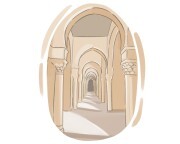
an arch-covered passage along the side of a group of buildings
a columned porch or courtyard that surrounds a building or an open space, typically found in ancient Greek and Roman architecture
a covered walkway or colonnade in ancient Greek architecture, typically consisting of a long row of columns with a roof overhead
a small, roofed theater or auditorium in ancient Greece and Rome used for musical performances, poetry readings, and other cultural events
a large, rectangular building with a central nave, side aisles, and often a raised apse at one end
a room or gallery that is open in one or more sides, particularly one that is attached to a house and faces a garden on one side
the central chamber or inner sanctuary of a temple in classical architecture, where the cult statue or sacred objects were housed
a decorative motif in the form of stylized flower or leaf, typically used in ancient Greek and neoclassical architecture
a series of arches or arcades that are supported by columns or piers, often used in architectural designs to create decorative openings or galleries
a decorative ribbon or scroll motif typically found in Renaissance and Baroque styles, often used to display inscriptions or decorative elements
a double-curved molding profile featuring a concave upper curve and a convex lower curve, commonly used in classical and neoclassical architecture for decorative purposes
a semicircular or rectangular recess in a building, often with seating, used for social gatherings or as a decorative architectural feature
the topmost platform or step of a classical Greek or Roman temple on which the columns are placed
a projecting decorative molding or cornice forming the uppermost part of an entablature or wall, common in classical architecture
an ornamental element placed on the apex or corners of a pediment or the top of a roof in classical architecture, typically depicting decorative figures or motifs
a small, often artificial, cave-like structure or enclosed space that is designed for aesthetic or functional purposes
a decorative block or projection that is typically found under the projecting eaves of a classical entablature
one of the classical architectural orders characterized by slender, fluted columns with scroll-like capitals adorned with volutes
a classical architectural order characterized by its ornate capital adorned with acanthus leaves, often used in grand and elaborate structures
a decorative molding or projection that runs along the topmost part of a building's exterior wall, typically serving as a crowning element and providing a transition between the wall and the roof
a decorative element used in classical architecture to cover the joints between roof tiles and the eaves of a building, often featuring intricate designs or motifs
a decorative pattern in architecture that features alternating oval shapes and V-shaped forms used in molding or friezes
an open central courtyard or space, often with a skylight, typically surrounded by walls, characteristic of ancient Roman architecture
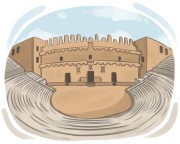
an open building that is round or oval in shape and has a space in the middle surrounded by several seats, originated in ancient Roman and Greek architecture used for public entertainments such as sports or drama
a simplified form of classical architectural order characterized by a plain and unadorned column with a simple capital and base