
Vocabulaire Essentiel pour le GRE - La Langue
Ici, vous apprendrez quelques mots anglais sur la langue, tels que "locatif", "neutre", "ironie", etc., qui sont nécessaires pour l'examen GRE.
Réviser
Flashcards
Orthographe
Quiz

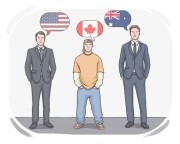
the spoken form of a language specific to a certain region or people which is slightly different from the standard form in words and grammar

dialecte
Les dialectes régionaux en anglais, tels que l'anglais britannique, l'anglais américain et l'anglais australien, varient en prononciation, vocabulaire et même en règles grammaticales.
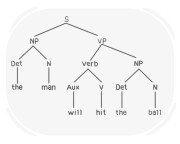
(linguistics) the way in which words and phrases are arranged to form grammatical sentences in a language
syntaxe
Comprendre la syntaxe d'une langue est crucial pour construire des phrases grammaticalement correctes et significatives.

(in the grammar of some languages) a group of nouns, pronouns, or adjectives changing in the same way to indicate case, number, and gender
déclinaison
Étudier les modèles de déclinaison des noms russes peut être difficile pour les apprenants en langue en raison des variations importantes des terminaisons.
(grammar) a change in the structure of a word, usually adding a suffix, according to its grammatical function
flexion, adjonction de désinence, déclinaison
Le latin repose fortement sur l'inflexion pour exprimer les relations grammaticales.
(grammar) to show how a verb changes depending on number, person, tense, etc.
conjuguer
Le professeur de linguistique a expliqué comment différentes langues conjuguent les verbes différemment en fonction de leurs structures grammaticales.
a change in normal word order, especially putting a verb before its subject
inversion
Les poètes utilisent souvent l'inversion pour maintenir le mètre et le rythme dans leurs œuvres.
(grammar) a particular form of a pronoun, adjective, or noun that acts as the direct object of a verb or preposition, used in some languages such as Greek or Latin
accusatif
Le cas accusatif en anglais peut être vu dans "Je le vois."
(in the grammar of some languages) the form of a noun, pronoun, or adjective that is used when addressing a particular person or thing
vocatif
Le vocatif est moins distinct en anglais moderne mais encore évident dans certaines phrases.
relating to a grammatical case that is used to indicate possession, origin, or a close association
génitif
Elle a demandé des éclaircissements sur l'usage du génitif dans les noms composés.
(of verbs) a form or mood that represents possibility, doubt, or wishes
subjonctif
En anglais, le subjonctif apparaît dans des phrases comme "Si j'étais toi."
(grammar) a specific form of a pronoun, adjective, or noun that is used to show by what means or by whom an action is done or to indicate the source of the action, found in some languages such as Latin or Sanskrit
ablatif, cas ablatif
La maîtrise de l'ablatif est essentielle pour lire et écrire en latin.
(grammar) a specific form of a pronoun, adjective, or noun that shows the place of an action or where a person or thing is
locatif
Dans certaines langues, le locatif exprime des concepts comme "à la maison" ou "dans la ville".
(grammar) describing an adjective or noun following a linking verb and completing the meaning of the copula
prédicatif
Les adjectifs prédicatifs suivent des verbes comme "être", "sembler", "apparaître" et "devenir".
a grammatical case used for the subject of a sentence or clause
nominatif, cas nominatif
Le nominatif "je" est utilisé pour se référer à soi-même en tant que sujet.
(grammar)(of a noun or adjective) joined directly to a noun and modifying it, without a linking verb
attributif
Les attributifs peuvent changer le sens ou l'emphase d'une phrase.
(grammar) the mood of a verb that states a fact
indicatif
En latin, l'indicatif indique des actions considérées comme factuelles.
(grammar) a function word that is used to form a question
interrogatif
Les interrogatifs en anglais commencent souvent par des mots interrogatifs comme "qui", "quoi", "où", "quand", "pourquoi" ou "comment".
(grammar) a gender of words that are neither masculine nor feminine
neutre
Le latin a trois genres : masculin, féminin et neutre.
(grammar) a letter or group of letters added to the end or beginning of a word to change its meaning
affix
L'affixe "un-" change le sens des adjectifs en leurs opposés.
the use of the same letter or sound at the beginning of the words in a verse or sentence, used as a literary device
allitération
Allitération ajoute une qualité rythmique aux discours et à la poésie.
a form of humor in which the words that someone says mean the opposite, producing an emphatic effect
ironie
a statement that implies or indirectly mentions something or someone else, especially as a literary device
allusion
Le titre du roman, "Le Meilleur des mondes", est une allusion à "La Tempête" de Shakespeare, suggérant des thèmes d'exploration et de découverte.
humor, irony, ridicule, or sarcasm used to expose or criticize the faults and shortcomings of a person, government, etc.
satire
La satire des politiques britanniques de Swift dans "Une Modeste Proposition" est encore étudiée aujourd'hui.
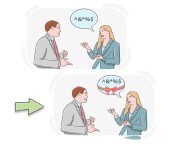
a word or expression that is used instead of a harsh or insulting one in order to be more tactful and polite
euphémisme
Pour éviter de contrarier les enfants, elle a employé un euphémisme, disant que leur lapin de compagnie était "parti à la ferme" au lieu de mentionner sa mort.
(linguistics) a process by which a new word or inflection is formed according to existing rules and regulations
analogie
(of a person) able to express thoughts or ideas in a clear and consistent manner
cohérent
Une personne cohérente peut présenter des idées complexes de manière simple.
the study of the origins and historical developments of words and their meanings
étymologie
L'étude de l'étymologie aide à comprendre comment les langues évoluent et empruntent les unes aux autres.
(of people) unable to express oneself clearly or easily
incapable de s'exprimer, qui s’exprime mal
Il se sentait frustré par son explication inarticulée, incapable d'exprimer clairement ses idées.
the redundant repetition of an idea using different words in a sentence or phrase
tautologie
De nombreux débutants en écriture font souvent l'erreur d'utiliser des tautologies sans s'en rendre compte.
(linguistics) a branch of linguistics that deals with the sentences and the contexts in which they are used
pragmatique
Comprendre la pragmatique aide les interprètes à naviguer dans les nuances subtiles des négociations diplomatiques.
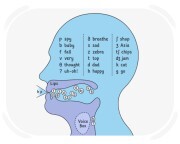
the science and study of speech sounds and their production
phonétique
the smallest unit of sound in a language that can distinguish meaning, often represented by a specific symbol in phonetic notation
phonème
Par exemple, en anglais, les phonèmes /p/ et /b/ sont distincts car ils peuvent changer le sens des mots comme "pat" et "bat".
(linguistics) the smallest meaningful unit of a language that does not necessarily stand alone and cannot be divided
morphème
Le mot "unhappiness" contient trois morphèmes : "un-", "happy" et "-ness".
(linguistics) a basic linguistic unit that is meaningful and underlies a set of words which are related through inflection
lexème
Par exemple, le lexème "run" inclut la forme de base "run", ainsi que ses flexions comme "ran", "running" et "runs".
a variant pronunciation of a phoneme, which can occur due to phonetic differences in specific contexts or environments within a language
allophone
La prononciation du son "t" dans "water" comme une battue [ɾ] en anglais américain est un allophone du phonème /t/.
(grammar) the act of omitting a word or words from a sentence, when the meaning is complete and the omission is understood from the context
ellipse
Dans les messages texte, les points de suspension peuvent exprimer une hésitation ou une fin de phrase qui traîne en longueur.
each of two or more words with the same spelling or pronunciation that vary in meaning and origin
homonyme
L'homonyme "row" peut signifier à la fois une ligne de choses et une dispute.
(grammar) one of two or more words with the same pronunciation that differ in meaning, spelling or origin
homophone
Lors de l'écriture de poésie, certains poètes utilisent habilement des homophones pour ajouter des couches de sens à leurs vers.
(phonetics) a gliding speech sound formed by the combination of two vowels in a single syllable
diphtongue
Apprendre à prononcer les diphtongues avec précision est important pour une communication claire.
a word that mimics the sound it represents
onomatopée
Les poètes utilisent souvent l'onomatopée pour évoquer des expériences sensorielles à travers le langage.
