Advanced Vocabulary for TOEFL - Politics
Here you will learn some English words about politics, such as "electoral", "coalition", "bilateral", etc. that are needed for the TOEFL exam.
Review
Flashcards
Spelling
Quiz


the state of being a candidate in an election

related to voting, elections, or the process of choosing representatives through voting mechanisms

relating to a form of government where the legislature, known as parliament, has significant control over making laws and monitoring the government
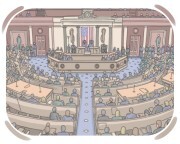
relating to the United States Congress, which makes laws and oversees the government
(in the US) a group of people who represent American citizens in all of the states and who formally cast votes to elect the president and vice president
the people in a particular area who are represented by an elected member of a parliament or legislature
a vote sent by mail by someone who cannot go to the polling place
the head of government or state in some countries, responsible for leading the executive branch

the action of striving to bring about social or political reform, especially as a member of an organization with specific objectives

an alliance of different groups, political parties, or countries formed to work together for a particular purpose
a public vote in which people in a country or area decide or express their opinion on an important political or social question
a formal ceremony at which a person is admitted to office
concerning two groups or countries
having no interest or involvement in politics
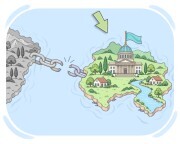
the freedom of a country, region, or organization to govern itself independently
(of countries, organizations, regions, etc.) not governed by another force, and is in control of itself

the doctrine that separates the state from religious associations
an economic system in which property and businesses are primarily privately owned and operated for profit
the political belief that promotes personal freedom, democracy, gradual changes in society, and free trade
the practice or policy of a nation controlling or ruling over foreign territories, often exploiting them economically and politically
the political practice of only being concerned with one's home country and not getting involved in international affairs
a type of politics that purports to represent the opinions and desires of ordinary people in order to gain their support
an extreme right-wing political attitude or system characterized by a strong central government, aggressively promoting one's country or race above others, as well as prohibiting any opposition
a political system in which a small group of high-powered people control a country or organization
a social and land-owning system in medieval Europe in which people were granted land and protection by a nobleman in exchange, they had to fight and work for him
the belief in or pursuit of high principles, values, or ideals, often with a focus on the potential for perfection or improvement
a politician who appeals to the desires and prejudices of ordinary people instead of valid arguments in order to gain support
a union or league of political entities or organizations, often for common purposes
the act or process of joining separate organizations, regions, or other bodies to form a larger federation
an overenthusiastic individual, especially one who is devoted to a radical political or religious cause
strong pride in one's country and belief in its importance or superiority
a political system in which a central government controls the affairs of each self-governed state
a system in which one country controls or has influence over other countries, often by winning wars against them
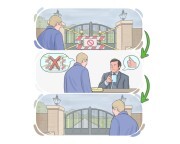
to try to persuade politicians or officials to support or oppose a particular policy, law, or action
not supporting any political party and remaining neutral in political matters