pattern

Essential Vocabulary for the GRE - Fight Fire With Fire

Here you will learn some English words about war, such as "wage", "ambush", "barracks", etc. that are needed for the GRE exam.

Review

Flashcards

Forms

Spelling

Quiz

Start learning
Essential Words Needed for the GRE
to vanquish

to defeat someone completely and decisively

Ex: The mighty army sought to vanquish the opposing forces and secure dominance over the region. 
Close
Sign in
veteran
veteran
[noun]

a former member of the armed forces who has fought in a war

Ex: The veterans gathered at the memorial to honor fallen comrades on Veterans Day. 
Close
Sign in
to wage
to wage
[Verb]

to participate in and carry out a specific action, such as a war or campaign
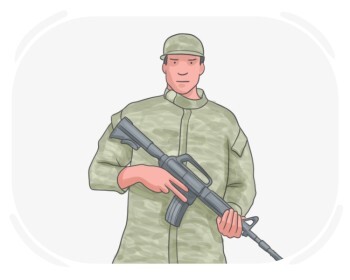
Ex: The environmental activists are waging a campaign to raise awareness about the importance of conservation. 
Close
Sign in
trooper
trooper
[noun]

a soldier of low rank who is a member of the military unit that uses either strong covering or vehicles protected by them

Ex: The trooper was assigned to operate one of the armored vehicles. 
Close
Sign in
truce
truce
[noun]

an agreement according to which enemies or opponents stop fighting each other for a specific period of time

Ex: After months of intense fighting, the warring factions agreed to a temporary truce to allow humanitarian aid into the region. 
Close
Sign in
accord
accord
[noun]

an official agreement between two countries or groups of people

Ex: The two countries signed a trade accord to boost economic relations. 
Close
Sign in
barracks
barracks
[noun]

a building or a set of buildings for soldiers to live in

Ex: The soldiers were assigned to newly built barracks, which provided much better living conditions than the old ones. 
Close
Sign in
battalion
battalion
[noun]

a military unit composed of a varying number of companies or platoons, typically commanded by a lieutenant colonel
Ex: The battalion coordinated with other units for the large-scale exercise. 
Close
Sign in
to blitz
to blitz
[Verb]

to carry out a sudden and intense military attack

Ex: The military commanders decided to blitz the enemy's positions, hoping to catch them off guard. 
Close
Sign in
bloodshed
bloodshed
[noun]

nnecessary spilling of blood, typically resulting from battles, conflicts, or acts of aggression

Ex: The war brought unprecedented bloodshed to the region, with countless lives lost. 
Close
Sign in
blockade
blockade
[noun]

a military action where the enemy is prevented from letting people or equipment through a certain area; often enforced with armed forces

Ex: The city was under blockade, cutting off all supply routes. 
Close
Sign in
brigade
brigade
[noun]

a large group of trained soldiers that is smaller than a division

Ex: The brigade was deployed to the front lines for the operation. 
Close
Sign in
to bombard

to drop bombs on someone or something continuously

Ex: During the war, the enemy aircraft would bombard the city with relentless airstrikes. 
Close
Sign in
brigadier general

an officer in the army who is ranked between a colonel and a major general

Ex: The brigadier general was in charge of the division’s strategic planning. 
Close
Sign in
admiral
admiral
[noun]

the highest-ranking officer in a fleet
Ex: The admiral stood on the deck, surveying the fleet with a sense of pride and responsibility. 
Close
Sign in
to ambush
to ambush
[Verb]

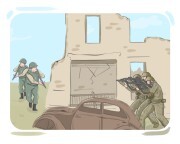
to wait in a concealed location and launch a surprise attack on a target
Ex: The guerrilla fighters planned to ambush the enemy convoy on the narrow mountain pass. 
Close
Sign in
armament
armament
[noun]

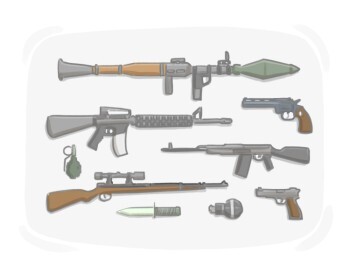
the military equipment and weaponry used by a country or military force

Ex: The country invested heavily in modernizing its armament, acquiring advanced missile defense systems and fighter jets. 
Close
Sign in
ammunition

bullets, shells, or other projectiles used in firearms

Ex: Soldiers checked their ammunition before the battle. 
Close
Sign in
to assassinate

to murder a prominent figure in a sudden attack, usually for political purposes

Ex: The secret agent was hired to assassinate the political leader during the summit. 
Close
Sign in
cavalry
cavalry
[noun]

a group of soldiers in an army who fight by armored vehicles

Ex: The cavalry led the charge during the battle. 
Close
Sign in
ceasefire
ceasefire
[noun]

a temporary peace during a battle or war when discussions regarding permanent peace is taking place

Ex: The two sides agreed to a ceasefire to allow peace talks to begin. 
Close
Sign in
civilian
civilian
[noun]

a person who is not a member of or not on active duty in armed forces or the police

Ex: The soldiers helped the civilians evacuate the area safely. 
Close
Sign in
cold war
cold war
[noun]

a state of unfriendly relationship between two states which are not openly at war with each other
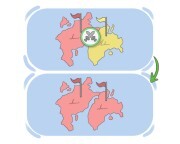
Ex: The two nations have been in a cold war for decades, avoiding direct conflict. 
Close
Sign in
to conquer

to gain control of a place or people using armed forces
Ex: The army worked strategically to conquer the enemy's territory. 
Close
Sign in
to conspire

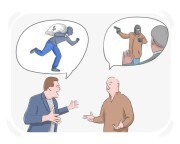
to make secret plans with other people to commit an illegal or destructive act

Ex: The group of individuals conspired to carry out a heist on the bank. 
Close
Sign in
contingent

a group of military personnel sent to join a larger force
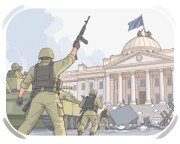
Ex: The small contingent arrived to reinforce the main army. 
Close
Sign in
coup
coup
[noun]

an unexpected, illegal, and often violent attempt to change a government

Ex: The military launched a coup to overthrow the democratically elected government and seize control of the country. 
Close
Sign in
court martial

a legal procedure for military personnel who break military laws; leading to charges against them

Ex: The soldier faced a court martial for disobeying orders. 
Close
Sign in
curfew
curfew
[noun]

an order or law that prohibits people from going outside after a specific time, particularly at night

Ex: The government imposed a strict curfew, requiring everyone to be indoors by 9 PM to maintain public safety. 
Close
Sign in
evacuation

the action of transferring people or being transferred to somewhere else to be safe from a dangerous situation

Ex: The coastal town ordered a mandatory evacuation as the hurricane approached, urging residents to seek shelter inland. 
Close
Sign in
garrison
garrison
[noun]

a military stronghold where soldiers are stationed for defense

Ex: The castle served as a garrison for the king's soldiers. 
Close
Sign in
incendiary

a device created to cause explosion and fire in order to completely destroy something
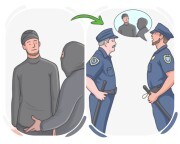
Ex: The police found an incendiary hidden in the abandoned building. 
Close
Sign in
to infiltrate

to secretly enter an organization or group with the aim of spying on its members or gathering information

Ex: During the Cold War, intelligence agencies attempted to infiltrate enemy organizations for espionage. 
Close
Sign in
legionary
legionary
[noun]

a soldier who fights in a very large group that is a part of an army called legion

Ex: The legionary stood guard at the camp entrance. 
Close
Sign in
mercenary
mercenary
[noun]

a professional soldier hired to serve in a foreign army, often motivated by payment rather than ideological or national allegiance

Ex: The army hired mercenaries to bolster its forces during the conflict in the region. 
Close
Sign in
marauder
marauder
[noun]

a person or an animal that wanders around in search of places to destroy, people to kill and steal from

Ex: The village was raided by a group of marauders. 
Close
Sign in
militia
militia
[noun]

a military group consisting of civilians who have been trained as soldiers to help the army in emergencies
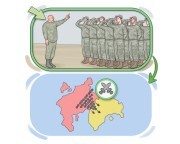
Ex: The militia was mobilized to assist in disaster relief efforts after the earthquake devastated the region. 
Close
Sign in
to mobilize

(of a state) to organize and prepare for a military operation

Ex: In response to the threat, the country decided to mobilize its military forces. 
Close
Sign in
to pillage

to plunder, typically during times of war or civil unrest

Ex: The invading army was condemned for its actions as it began to pillage villages, leaving destruction in its wake. 
Close
Sign in
rebellion
rebellion
[noun]

an organized action, usually violent, against an authority, attempting to bring about a change

Ex: The rebellion was sparked by harsh government policies. 
Close
Sign in
LanGeek
Download LanGeek app