Cambridge English: CPE (C2 Proficiency) - Hostile Actions

review-disable

review

flashcard-disable

flashcard

spelling-disable

spelling

quiz-disable

quiz

start-learning
Cambridge English: CPE (C2 Proficiency)

to approach or address someone aggressively or boldly, often with an intent to engage in conversation

Ex: The aggressive panhandler is currently accosting passersby for spare change .
affront [noun]

an action or remark intended to insult or show open disrespect

Ex: Vandalizing the memorial was considered an affront to the community .

to make one feel isolated or hostile toward a person or group

Ex: The controversial comments alienated him from the rest of the group .
atrocity [noun]

the extreme brutality of an action or behavior
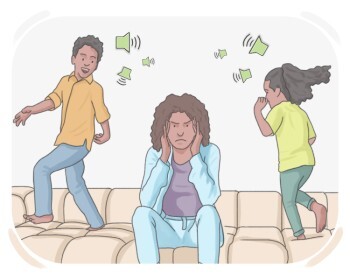
Ex: The atrocity of the terrorist attack was condemned by leaders worldwide .

to trouble or harass someone repeatedly over time

Ex: The politician was beleaguered with questions about the scandal .

to force a person into doing something by threatening or frightening them

Ex: She was browbeaten into apologizing , even though she felt she was right .
coercion [noun]

the act of compelling someone to act against their will by using force or threats
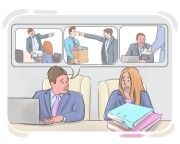
Ex: The regime used coercion to silence dissent .
to daunt [verb]

to cause a person to feel scared or unconfident
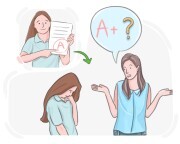
Ex: Despite her determination , the complexity of the task daunted the student , causing her to doubt her abilities .

to make someone feel uneasy, embarrassed, or anxious

Ex: An unexpected compliment from their crush discomfited them with a wave of self-consciousness .

to banish or force an individual to live in another country

Ex: The notorious criminal was expatriated to a distant island to ensure he could no longer harm society .
to flout [verb]

to openly mock or ridicule someone or something with disdain or contempt

Ex: She flouted at the suggestion , rolling her eyes in disbelief .

to encourage or provoke something, especially trouble or conflict

Ex: The speech was meant to foment fear among the people .

to disturb or unsettle someone, causing them to feel worried or uneasy

Ex: The sudden change in his friend 's attitude perturbed him , leaving him feeling uneasy about their relationship .

to overwhelm someone with a large amount of something, such as work, requests, or information

Ex: She felt inundated by emails every morning .
riposte [noun]

a sharp, clever, or critical response to a comment or action

Ex: His calm riposte turned the critic 's words back on him .
subversive [adjective]

intended to destabilize or overthrow an existing system, institution, or authority

Ex: Authorities banned the book for its subversive content .

to involve someone in an argument, conflict, or complex situation
Ex: The journalist 's investigative report unintentionally embroiled several public figures in a controversy .

to endanger a person or thing

Ex: The lack of safety measures could imperil the lives of the workers on the construction site .

to force someone to do something through threats or manipulation

Ex: The bully tried to coerce his classmates into giving him their lunch money through threats .

to deliberately provoke, encourage, or initiate actions that lead to conflict, hostility, or harmful consequences

Ex: Driven by their deep-seated jealousy , the envious neighbor attempted to instigate conflict between the two families .

to exclude someone from a community or group as a form of punishment or social rejection

Ex: The community decided to ostracize the troublemaker to maintain peace and order .

to cause something or someone to split into opposing groups

Ex: The media coverage polarizes public opinion .
duress [noun]

compulsion or threat used to force someone to act against their will

Ex: They claimed they acted under duress during the negotiation .
to oust [verb]

to remove someone from a position or place, often forcefully

Ex: The board of directors decided to oust the chairman for ethical violations .

to challenge someone to a fight or competition

Ex: The two teams have been exchanging words , and it looks like one of them is about to throw down the gauntlet .

to annoy or disturb someone, particularly through minor irritations

Ex: The constant ringing of his phone nettled her during the movie .

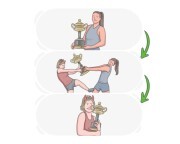
to torment someone by showing or promising something desirable that remains just out of reach

Ex: He tantalized the dog with a treat he would n't give .

to demotivate a person by talking negatively about their plans or opinions
Ex: Every time he brought up the possibility of pursuing a career in the arts , his pragmatic parents would throw cold water on his dreams , urging him to choose a more stable path .
to usurp [verb]

to wrongly take someone else's position, power, or right

Ex: The prince was accused of trying to usurp his elder brother 's position .
noxious [adjective]

causing harm

Ex: His noxious attitude poisoned the team 's morale .
to abase [verb]

to lower someone in rank, prestige, or self‑esteem
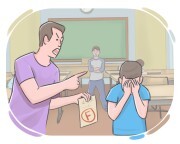
Ex: Publicly mocking the workers would only abase their morale .
to abash [verb]

to make someone feel uneasy and ashamed

Ex: It 's not polite to abash someone by pointing out their flaws in public .

to make someone react in a certain way or reveal information

Ex: The teacher used thought-provoking prompts to elicit insightful responses from the students .
to goad [verb]

to irritate or provoke someone, typically through persistent criticism, taunts, or annoying behavior

Ex: The political commentator would goad his opponents with sharp remarks during televised debates .

to commit a harmful, illegal, or immoral act, such as a crime or an offense

Ex: The criminal confessed to perpetrating a series of burglaries in the neighborhood .
Cambridge English: CPE (C2 Proficiency)
Deceitful Qualities & Roles Deception & Corruption Moral Corruption & Wickedness Ailments & Injuries
Treatments & Remedies The Body & Its State Criticism & Censure Sadness, Regret & Apathy
Fear, Anxiety & Weakness Generosity, Kindness & Composure Skill & Wisdom Friendliness & Good Nature
Vigor & Fortitude Favorable States & Qualities Honesty & Integrity Nature & Environment
Declaration & Appeal Casual & Annoying Talk Linguistic Terms & Sayings Styles & Qualities of Speech
Religion & Morality Magic & The Supernatural Time & Duration History & Antiquity
Legal Matters Improvement Foolishness & Folly Hostility, Temper & Aggression
Arrogance & Haughtiness Obstinacy & Stubbornness Social Roles & Archetypes Professions & Roles
Politics & Social Structure Science Hostile Actions Low Quality & Worthlessness
Burdens & Afflictions Physical Conflict Termination & Renunciation Prohibition & Prevention
Weakening & Decline Confusion & Obscurity Connection & Joining Warfare
Abundance & Proliferation Arts & Literature Spoilage Strong Emotional States
Color, Light & Visual Patterns Form, Texture & Structure Suitability & Appropriateness Approval & Agreement
Additions & Attachments Animals & Biology Finance & Valuables Tools & Equipment
Cognition & Understanding Caution, Judgment & Awareness Sound & Noise Movement
Physical Descriptions Landforms Objects & Materials Ceremonies & Revelry
Creation & Causation Argument & Disparagement Agriculture & Food Unconventional States
Family & Marriage Dwelling & Inhabiting Scent & Flavor Conceptual Extremes
Similarity & Difference