Cambridge IELTS 18 - Academic "Test 4 - Reading - Passage 2 (1)" Vocabulary

Here you can find the vocabulary from Test 4 - Reading - Passage 2 (1) in the Cambridge IELTS 18 - Academic coursebook, to help you prepare for your IELTS exam.

review-disable

review

flashcard-disable

flashcard

spelling-disable

spelling

quiz-disable

quiz

start-learning
Cambridge IELTS 18 - Academic
meanwhile [adverb]

in a way that connects or contrasts two simultaneous actions, events, or conditions

Ex: One sibling was focused on academic achievements ; meanwhile , the other was exploring creative pursuits .
the former [pronoun]

the first of two people, things, or groups previously mentioned

Ex: He was offered two job opportunities , and he decided to take the former as it aligned better with his career goals .

to accept something as a challenge

Ex: The students were excited to take on the challenge of organizing the school fair .
to infer [verb]

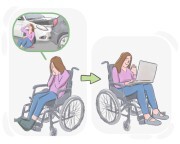
to reach an opinion or decision based on available evidence and one's understanding of the matter
Ex: Scientists can infer the existence of certain particles based on experimental results .

to give special attention or importance to something

Ex: Although the report covered many topics , the conclusion strongly emphasized the need for further research on climate change .

anything that blocks or slows progress

Ex: Bureaucratic red tape can be a major impediment to starting a new business .

to apply or utilize a device, tool, or method for a specific purpose

Ex: The farmer implemented advanced irrigation systems to conserve water during the drought .

to think about something or someone all the time, in a way that makes one unable to think about other things

Ex: Some people obsess about their appearance , leading to body image concerns .
constant [adjective]

happening continuously without stopping for a long time

Ex: The constant rain in the region led to flooding in low-lying areas .

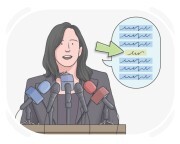
to examine or study something in detail in order to explain or understand it
Ex: The financial analyst will analyze the company 's quarterly reports to assess its performance .
to rank [verb]

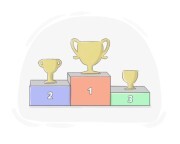
to position someone or something on a scale based on importance, quality, etc.

Ex: He ranks the books on his shelf by their significance to him .

a notable feature or quality that defines or describes something

Ex: Patience is a characteristic that helps in dealing with difficult situations .

a state of disagreement between people's opinions, actions, or personalities, often resulting in tension

Ex: Their marriage was marked by constant dissonance in values and priorities .

to clap one's hands as a sign of approval

Ex: The entire auditorium seemed to applaud in unison after the breathtaking magic trick .

to provide abstract or intangible things, such as punishments, compliments, judgments, advice, etc., to someone

Ex: The critic was known for handing out scathing judgments on the quality of films , which sometimes led to controversy in the industry .
target [noun]

a goal that someone tries to achieve

Ex: The team worked hard to reach their production target .
aside from [preposition]

used to indicate exclusion of a particular thing or person

Ex: Aside from the occasional disagreement , they have a strong relationship .
harsh [adjective]

cruel and unkind toward others

Ex: His harsh tone during the meeting alienated his colleagues .

a person who collects, analyzes, and interprets numerical data

to claim [verb]

to say that something is the case without providing proof for it

Ex: Yesterday , the politician confidently claimed that the opposition 's policies were harmful .
data [noun]

information or facts collected to be used for various purposes

Ex: Weather forecasters rely on data from satellites and weather stations to predict future conditions .
just about [adverb]

to a very close amount or situation

Ex: The bakery is just about to launch a new line of gluten-free pastries .
growth [noun]

the process of physical, mental, or emotional development

Ex:
mindset [noun]

a set of attitudes, beliefs, or a mental disposition that influences how a person interprets and responds to situations

Ex: He approached the project with a fixed mindset , believing that his abilities were unchangeable .

become settled or established and stable in one's residence or life style

the ability to correctly utilize thought and reason, learn from experience, or to successfully adapt to the environment

Ex: His intelligence allowed him to excel in both science and art .
innate [adjective]

(of a quality or skill) gained from the moment that one was born

to replace something, especially by force or through competition

Ex: The ambitious team worked hard to supplant their rivals and become the industry leaders .
author [noun]

someone who originates or causes or initiates something

cognitive [adjective]

referring to mental processes involved in understanding, thinking, and remembering

Ex: The cognitive abilities of children develop rapidly during early childhood .

the ability or potential of doing something or achieving a certain goal
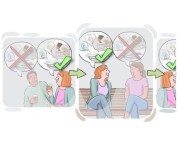
Ex: She demonstrated her capability by completing the task ahead of schedule .
to hold [verb]

to have a specific opinion or belief about someone or something

Ex: He holds radical views on economic reform .
view [noun]

a personal belief or judgment that is not based on proof or certainty

Ex: He shared his view on the new legislation .

to measure or express something as a number or amount

Ex: The accountant will quantify the company 's expenses for the fiscal year .
progressive [adjective]

supporting and encouraging positive change and advancement

Ex: The progressive approach to education focuses on adapting to the needs of each student .
thinker [noun]

a person with strong intellectual abilities, often working in a field that requires deep thought and knowledge

Ex: The novelist is a thinker with a deep understanding of human psychology and social dynamics .
notion [noun]

a general concept or belief

Ex: People have various notions about what makes a good leader .
inherent [adjective]

inseparable essential part or quality of someone or something that is in their nature

Ex: Creativity is an inherent quality that can be nurtured through practice and exploration .
destiny [noun]

the events or situations that are predetermined or inevitable for a person, often believed to be controlled by a higher power
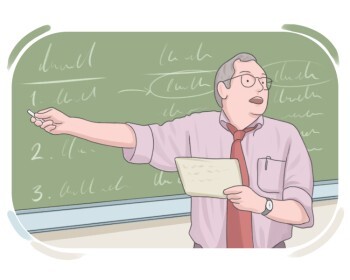
Ex: The prophecy foretold his destiny as a legendary hero .
educator [noun]

someone whose job is to teach people

Ex: The conference brought together educators from around the world to share best practices in teaching .

to change and become stronger or more advanced

Ex: Over time , economies can develop and become more resilient to external shocks .
given [preposition]

used to indicate that something is provided or accepted as a basis for a particular situation or argument
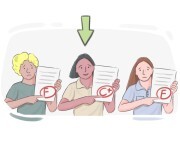
Ex: She made an impressive recovery , given the severity of her injury .
relatively [adverb]

to a specific degree, particularly when compared to other similar things

Ex: The cost of living here is relatively low .
motivational [adjective]

encouraging or inspiring action or behavior

Ex: The company offers motivational workshops to boost employee morale .
poster [noun]

a large printed picture or notice, typically used for advertising or decoration

Ex: The environmental organization created a powerful poster to raise awareness about climate change , featuring striking images of melting glaciers and endangered wildlife .
to coax [verb]

to persuade someone to do something by being kind and gentle, especially when they may be unwilling

Ex: The owner had to coax the reluctant cat to take its medicine by mixing it with a favorite treat .
to see [verb]

to regard someone or something in a specific way

Ex: Let 's see the situation as an opportunity for growth and learning .

something that serves to show, suggest, or point to a fact, condition, or situation

Ex: The footprints were an indication that someone had passed by .
to note [verb]

to mention something to make it stand out

Ex: The guide noted the historical significance of the building .

to develop something using certain facts, ideas, situations, etc.

Ex:
effort [noun]

an attempt to do something, particularly something demanding

Ex: Learning a new language requires persistent effort and practice .

to gradually establish an idea, feeling, etc. in someone's mind

Ex: Coaches strive to instill discipline and teamwork in athletes through regular training sessions and motivational talks .

as a result or logical outcome

Ex: The project lacked funding ; subsequently , it was put on hold indefinitely .

to conduct an experiment or test again, often under the same conditions, in order to verify or confirm the results
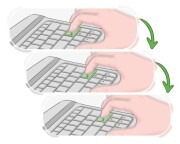
Ex: They replicated the study in a different lab to see if the same outcomes occurred .
repeatedly [adverb]

in a manner that occurs multiple times

Ex: The alarm rang repeatedly .
null [adjective]

invalid or not legally recognized

Ex: The test results were null after the lab made a mistake in the procedure .
to cope [verb]

to handle a difficult situation and deal with it successfully

Ex: Employees cope with changes in the workplace by adapting to new procedures and technologies .

an action, treatment, or manipulation that is introduced by researchers to test its effects on variables of interest

Ex:
study [noun]

a detailed and careful consideration and examination

Ex: The study concluded that regular exercise significantly improves mental health and cognitive function .

to do a particular thing or have the qualities needed for being punished or rewarded

Ex: The hardworking employee deserved the bonus for exceeding the sales targets .

a broad or comprehensive mental perspective or view

Ex: She considered the landscape of human emotions in her study .

to strongly reject or oppose something

Ex: Many scientists revolted against the outdated theory .

to not be understood, noticed, or appreciated by someone, even though it was intended to be

Ex:
Cambridge IELTS 18 - Academic
Test 1 - Listening - Part 1 Test 1 - Listening - Part 2 (1) Test 1 - Listening - Part 2 (2) Test 1 - Listening - Part 3 (1)
Test 1 - Listening - Part 3 (2) Test 1 - Listening - Part 4 (1) Test 1 - Listening - Part 4 (2) Test 1 - Reading - Passage 1 (1)
Test 1 - Reading - Passage 1 (2) Test 1 - Reading - Passage 2 (1) Test 1 - Reading - Passage 2 (2) Test 1 - Reading - Passage 3 (1)
Test 1 - Reading - Passage 3 (2) Test 2 - Listening - Part 1 Test 2 - Listening - Part 2 (1) Test 2 - Listening - Part 2 (2)
Test 2 - Listening - Part 3 (1) Test 2 - Listening - Part 3 (2) Test 2 - Listening - Part 4 Test 2 - Reading - Passage 1 (1)
Test 2 - Reading - Passage 1 (2) Test 2 - Reading - Passage 1 (3) Test 2 - Reading - Passage 2 (1) Test 2 - Reading - Passage 2 (2)
Test 2 - Reading - Passage 2 (3) Test 2 - Reading - Passage 3 (1) Test 2 - Reading - Passage 3 (2) Test 2 - Reading - Passage 3 (3)
Test 3 - Listening - Part 1 Test 3 - Listening - Part 2 Test 3 - Listening - Part 3 Test 3 - Listening - Part 4
Test 3 - Reading - Passage 1 (1) Test 3 - Reading - Passage 1 (2) Test 3 - Reading - Passage 2 (1) Test 3 - Reading - Passage 2 (2)
Test 3 - Reading - Passage 3 (1) Test 3 - Reading - Passage 3 (2) Test 4 - Listening - Part 1 Test 4 - Listening - Part 2
Test 4 - Listening - Part 3 Test 4 - Listening - Part 4 Test 4 - Reading - Passage 1 (1) Test 4 - Reading - Passage 1 (2)
Test 4 - Reading - Passage 2 (1) Test 4 - Reading - Passage 2 (2) Test 4 - Reading - Passage 3 (1) Test 4 - Reading - Passage 3 (2)