pattern

C1 Level Wordlist - Education

Here you will learn some English words about education, such as "admission", "janitor", "scholar", etc. prepared for C1 learners.

Review

Flashcards

Forms

Spelling

Quiz

Start learning
CEFR C1 Vocabulary
admission
admission
[noun]

the permission given to someone to become a student of a school, enter an organization, etc.

Ex: She received her letter of admission to the university, confirming her acceptance into the engineering program. 
Close
Sign in
attendance

the state of being present at an event or a place

Ex: The attendance at the conference exceeded expectations, with over 500 participants from around the world. 
Close
Sign in
detention
detention
[noun]

a type of punishment for students who have done something wrong and as a result, they cannot go home at the same time as others

Ex: He was assigned detention for being late to class three times in a row. 
Close
Sign in
principal
principal
[noun]

the person in charge of running a school
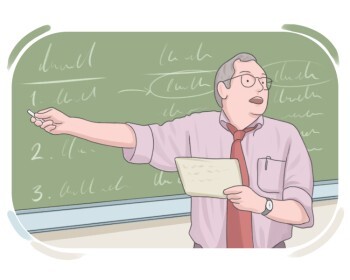
Ex: The principal greeted students at the front entrance of the school every morning. 
Close
Sign in
educator
educator
[noun]

someone whose job is to teach people

Ex: As an educator, she believes in fostering creativity and critical thinking in her students. 
Close
Sign in
janitor
janitor
[noun]

someone whose job is cleaning and taking care of a school or other building

Ex: The janitor works late hours to ensure the school is clean and ready for the next day. 
Close
Sign in
chair
chair
[noun]

the position that a university professor has

Ex: Dr. Smith was appointed chair of the English department after 20 years of distinguished teaching and research. 
Close
Sign in
dropout
dropout
[noun]

someone who leaves school or college before finishing their studies

Ex: Despite being a high school dropout, he went on to build a successful business. 
Close
Sign in
scholar
scholar
[noun]

someone who has a lot of knowledge about a particular subject, especially in the humanities

Ex: The conference featured a renowned scholar who spoke about ancient Greek philosophy. 
Close
Sign in
truant
truant
[noun]

a student who does not have permission for not attending school

Ex: The principal called the parents of the truant to discuss their child's repeated absences. 
Close
Sign in
to confer
to confer
[Verb]

to give an official degree, title, right, etc. to someone
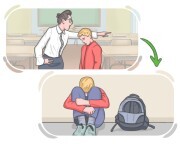
Ex: The university will confer degrees upon the graduating students during the commencement ceremony. 
Close
Sign in
to expel
to expel
[Verb]

to force someone to leave a place, organization, etc.

Ex: The school decided to expel the student for repeated violations of the code of conduct. 
Close
Sign in
to skip
to skip
[Verb]

to not do an activity on purpose, particularly one that one is supposed to do or usually does

Ex: Feeling under the weather, she decided to skip her morning workout routine. 
Close
Sign in
to flag
to flag
[Verb]

to put or draw a mark on something in order to make it more noticeable

Ex: The supervisor asked the team to flag any errors in the report with a red highlight. 
Close
Sign in
dissertation

a long piece of writing on a particular subject that a university student presents in order to get an advanced degree

Ex: She spent months researching for her dissertation on climate change. 
Close
Sign in
doctorate
doctorate
[noun]

the highest degree given by a university

Ex: She earned her doctorate in physics from Harvard University. 
Close
Sign in
field day
field day
[noun]

a day on which no classes are held and students take part in sports games

Ex: The school organized a field day at the end of the semester to celebrate the students' hard work. 
Close
Sign in
field trip

a trip made by researchers or students to learn more about something by being close to it

Ex: The class went on a field trip to the museum to learn about ancient civilizations. 
Close
Sign in
GRE
GRE
[noun]

a test that must be passed in the US by students who want to continue their education after their first degree

Ex: She spent months preparing for the GRE in order to apply to graduate school. 
Close
Sign in
cognitive
cognitive
[Adjective]

referring to mental processes involved in understanding, thinking, and remembering

Ex: Cognitive therapy helps individuals recognize and change negative thought patterns. 
Close
Sign in
extracurricular
extracurricular
[Adjective]

not included in the regular course of study at a college or school

Ex: She participated in several extracurricular activities, including the debate team and the school newspaper. 
Close
Sign in
intensive
intensive
[Adjective]

involving a lot of effort, attention, and activity in a short period of time

Ex: The intensive training program prepared them for the upcoming competition in just two weeks. 
Close
Sign in
literate
literate
[Adjective]

having the skills to read and write

Ex: She became literate at a young age and developed a lifelong love for reading. 
Close
Sign in
prestigious
prestigious
[Adjective]

having a lot of respect, honor, and admiration in a particular field or society

Ex: Winning a Nobel Prize is considered one of the most prestigious achievements in academia. 
Close
Sign in
vocational
vocational
[Adjective]

involving the necessary knowledge or skills for a certain occupation

Ex: Vocational training programs offer hands-on experience in various trades. 
Close
Sign in
syllabus
syllabus
[noun]

a document that outlines the topics, assignments, and expectations for a course

Ex: The syllabus for the English Literature course includes readings from classic novels, poetry, and drama. 
Close
Sign in
module
module
[noun]

a unit of study within a course offered by a college or university, covering a specific topic or area of study
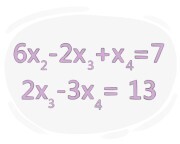
Ex: The module on Shakespearean sonnets is part of the English Literature course. 
Close
Sign in
algebra
algebra
[noun]

a branch of mathematics in which abstract letters and symbols represent numbers in order to generalize the arithmetic
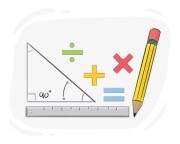
Ex: In high school, students typically begin studying algebra to learn about equations and variables. 
Close
Sign in
arithmetic

a branch of mathematics that deals with addition, subtraction, multiplication, etc.

Ex: Students in elementary school learn basic arithmetic operations such as addition, subtraction, multiplication, and division. 
Close
Sign in
humanities

studies that deal with people and their behavior such as language, philosophy, history, etc.

Ex: She decided to major in humanities to explore her interests in literature, history, and philosophy. 
Close
Sign in
residence hall

a college or university building in which students can reside

Ex: She lived in a residence hall during her freshman year of college. 
Close
Sign in
theology
theology
[noun]

the study of religions and faiths

Ex: She decided to study theology to better understand her faith. 
Close
Sign in
zoology
zoology
[noun]

a branch of science that deals with animals
Ex: She decided to major in zoology because of her fascination with animal behavior. 
Close
Sign in
SAT
SAT
[noun]

a test that high school students take before college or university in the US

Ex: She took the SAT exam in her junior year of high school as part of her college application process. 
Close
Sign in
AWOL
AWOL
[Adjective]

(of a person) not attending a place one was supposed to or leaving an obligation without any notice or permission

Ex: He went AWOL after lunch and never came back to work. 
Close
Sign in
LanGeek
Download LanGeek app