
Vocabulaire pour l'IELTS Academic (Score 6-7) - Guerre
Ici, vous apprendrez quelques mots anglais liés à la guerre qui sont nécessaires pour l'examen académique IELTS.
Réviser
Flashcards
formes
Orthographe
Quiz
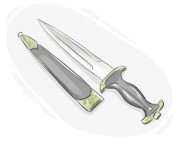
a short weapon with a pointed blade

poignard
Enveloppée dans un fourreau en cuir, la dague pendait à la ceinture du soldat.

an explosive that is very powerful
dynamite
Alfred Nobel a inventé la dynamite en 1867 comme une alternative plus sûre à la nitroglycérine, qui est très volatile.
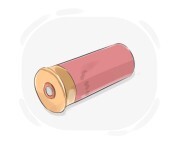
a component of ammunition that is loaded into a firearm, including a casing or a hull, gunpowder, a primer, and a projectile
obus, cartouche
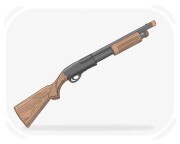
a long gun that can shoot multiple small bullets at one time, suitable for hunting animals such as birds
fusil de chasse, carabine à canon scié

a piece of military equipment that is put on or just under the ground or in the sea, which explodes when it is touched
mine
a state of unfriendly relationship between two states which are not openly at war with each other
guerre froide
Malgré la guerre froide, les pourparlers diplomatiques ont continué en coulisses.
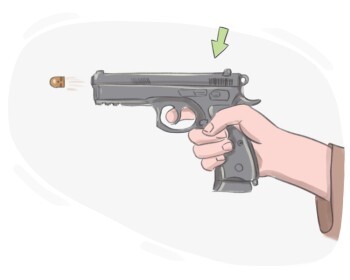
a portable weapon that uses controlled explosions to propel a projectile through a barrel
arme à feu, arme de poing
Les chasseurs utilisent un fusil comme arme à feu principale pour chasser le gibier.
a mid-ranking officer in the armed forces, responsible for commanding troops and assisting superior officers
lieutenant, officier subalterne
a military group consisting of civilians who have been trained as soldiers to help the army in emergencies
milice, réserve
En temps de guerre, les milices complètent souvent les forces armées régulières, fournissant une main-d'œuvre et un soutien supplémentaires.
a long narrow hole dug in the ground in which soldiers move and are protected from enemy fire
tranchée
La vie dans la tranchée était dure, avec une exposition constante aux intempéries et la menace toujours présente des tirs ennemis.
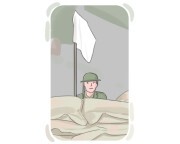
to stop fighting or resisting and accept defeat
se rendre, capituler
a surprise attack or trap set by one party against another, typically while the targeted party is unaware or unprepared
embuscade, guet-apens
Les combattants de la guérilla ont tendu une embuscade à la patrouille insoupçonnée, les prenant au dépourvu.
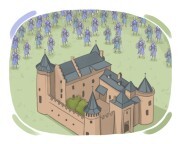
to surround a place, typically with armed forces, in order to force those inside to give up or surrender
assiéger, encercler
Pendant le siège, les forces opposées ont travaillé à assiégé la ville de tous les côtés.
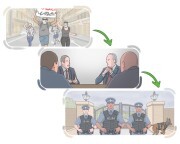
to position soldiers or equipment for military action
déployer
Le stratège militaire a suggéré de déployer l'artillerie sur un terrain plus élevé pour une meilleure visibilité.
a sudden surprise attack on a place or group, especially by an armed force
descente, rafle
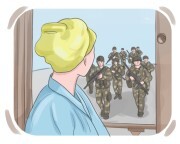
to enter a territory using armed forces in order to occupy or take control of it
envahir
Historiquement, les empires cherchaient souvent à envahir et à étendre leurs territoires.
to secure a place and make it resistant against attacks, particularly by building walls around it
fortifier, renforcer
Les anciens remparts de la ville ont été construits pour fortifier la colonie contre les armées envahissantes.
a brief violent fight or military confrontation between opposing sides
affrontement, accrochage
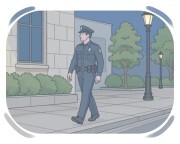
the act of regularly moving around an area to check for danger, crime, or other problems
patrouille
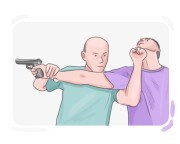
to deprive someone or something of weapons or the ability to cause harm
désarmer, neutraliser
Le soldat a désarmé le combattant ennemi en frappant rapidement l'arme de sa main.
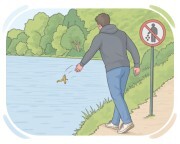
an act that violates an agreement, law, etc.
rupture, infraction, abus
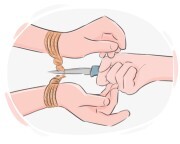
to free someone or something from oppression or captivity
libérer
Les militants ont travaillé sans relâche pour libérer les animaux des conditions inhumaines de l'élevage industriel.
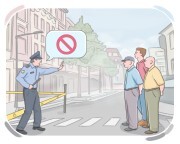
to push away or cause something or someone to retreat or withdraw
repousser
Le chevalier a levé son bouclier pour repousser les flèches entrantes.
to recruit or engage an individual for service in the military
enrôler, recruter
En temps de guerre, les nations ont souvent besoin d'enrôler des citoyens pour défendre leurs frontières.
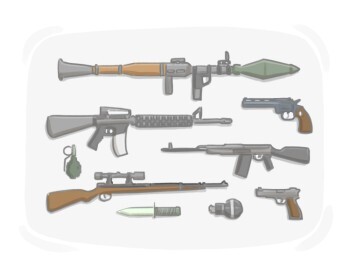
a weapon or tool used for fighting or hunting
arme, armement
to participate in and carry out a specific action, such as a war or campaign
mener, engager
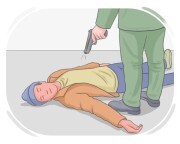
to seriously injure or kill a person by shooting them, particularly someone who is defenseless
blesser grièvement ou tuer quelqu'un par balles, abattre quelqu'un à coups de feu notamment s'il est sans défense
La police a réussi à abattre le fugitif armé pendant la poursuite.
an attack made in response to someone else's attack
contre-attaque
Leur contre-attaque a surpris les forces opposées.
foot soldiers who fight on the ground with small arms
infanterie, fantassins
Pendant la bataille, l'infanterie s'est engagée dans un combat rapproché avec les forces ennemies.
a temporary peace during a battle or war when discussions regarding permanent peace is taking place
cessez-le-feu, trêve
Le cessez-le-feu a fourni une pause bien nécessaire par rapport aux combats.
a defensive structure or system constructed to protect an area or position from enemy attacks, typically including walls, towers, and other defensive elements
fortification, ouvrage défensif
nnecessary spilling of blood, typically resulting from battles, conflicts, or acts of aggression
effusion de sang, bain de sang
Le cessez-le-feu a été convenu pour éviter d'autres effusion de sang entre les factions belligérantes.
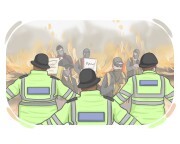
to bring something or someone under control, often using authority or force
réprimer, brimer
Des efforts continus sont actuellement en cours pour réprimer la rébellion.
o remove or reduce military forces, weapons, or military capabilities from a region, area, or entity, typically as part of a peace agreement, disarmament treaty, or unilateral decision to promote peace
démilitariser, désarmer
Le gouvernement a décidé de démilitariser les îles contestées dans l'espoir de désamorcer les tensions avec les pays voisins.
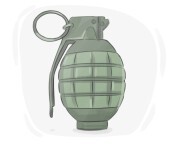
a small bomb that explodes in a few seconds, can be thrown by hand or fired from a gun
grenade
Ils se sont entraînés à lancer des grenades pendant les exercices d'entraînement militaire.
