
Listă de Cuvinte Nivel C2 - Lingvistică
Aici vei învăța toate cuvintele esențiale pentru a vorbi despre lingvistică, adunate special pentru elevii de nivel C2.
Revizuire
Fișe de studiu
Ortografie
Chestionar

the fact of having an excessive number of words that results in being tedious

prolixitate
Conferința profesorului a fost criticată pentru prolixitatea sa, deoarece mulți studenți au considerat detaliile excesive și explicațiile lungi copleșitoare și plictisitoare.
the study of techniques and principles for using language effectively, especially in public speaking
retorică, arta oratorică
A studiat retorica pentru a-și îmbunătăți abilitățile de dezbatere.
the interconnectedness and referencing of texts, where one text refers to or influences another, creating layers of meaning and a complex web of relationships between texts
intertextualitate, interconectarea textelor
Intertextualitatea îmbogățește experiența de lectură permițând cititorilor să recunoască și să aprecieze conexiunile dintre diferite opere literare și temele lor.
the overlapping and blending of language elements, such as sounds or grammatical structures, within speech or writing
imbricare, suprapunere
Imbricarea limbii engleze și a celei spaniole în regiunile de frontieră creează un amestec lingvistic unic care fascinează lingviștii.
(grammar) the use of two adjacent noun phrases having the same referent that have the same syntactical role in a sentence
apoziție, alăturare
În lingvistică, apoziția se referă la o construcție gramaticală în care două elemente, de obicei fraze nominale, sunt plasate una lângă alta, cu un element care servește la definirea sau modificarea celuilalt.
a new word that is formed by the combination of two other words blending their meaning and sounds
cuvânt portmanteau, cuvânt compus
Termenul "brunch" este un cuvânt telescopat care combină "breakfast" și "lunch".
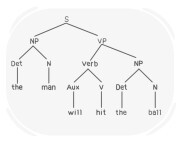
(linguistics) the way in which words and phrases are arranged to form grammatical sentences in a language
sintaxă, structură gramaticală
În lingvistică, sintaxa se referă la regulile care guvernează structura propozițiilor, determinând cum sunt aranjate cuvintele pentru a transmite sens.
(linguistics) the smallest meaningful unit of a language that does not necessarily stand alone and cannot be divided
morfem, cea mai mică unitate de sens
În lingvistică, un morfem este cea mai mică unitate de sens sau funcție gramaticală într-o limbă.
(linguistics) a branch of linguistics that deals with meaning, reference, or truth
semantică
În lingvistică, semantica este studiul semnificației în limbaj, concentrându-se pe modul în care cuvintele, frazele și propozițiile transmit semnificația.
the complete set of meaningful units in a language or a branch of knowledge, or words or phrases that a speaker uses
lexicon, vocabular
Lexiconul unei limbi cuprinde toate cuvintele și expresiile pe care vorbitorii le folosesc pentru a comunica semnificații.
(grammar) a word or phrase that refers to a preceding word or phrase
anaforă, repetiție
Anafora se referă la dispozitivul retoric de a repeta un cuvânt sau o expresie la începutul unor propoziții sau fraze succesive.
the phenomenon in language where a single word has multiple related meanings or senses
polisemie, fenomenul polisemiei
Lingviștii studiază polisemia pentru a înțelege cum cuvintele dobândesc și mențin diverse semnificații în diferite contexte.
a variant pronunciation of a phoneme, which can occur due to phonetic differences in specific contexts or environments within a language
un alofon, o variantă de pronunție a unui fonem
În fonetică, un alofon este o formă variantă a unui fonem, care apare în medii fonetice specifice.
(linguistics) a basic linguistic unit that is meaningful and underlies a set of words which are related through inflection
lexem, unitate lingvistică de bază
Un lexem este cea mai mică unitate de sens într-o limbă, care cuprinde atât un cuvânt, cât și toate formele sale flexionare.
the smallest unit of sound in a language that can distinguish meaning, often represented by a specific symbol in phonetic notation
fonem, unitate fonologică
În lingvistică, un fonem este cea mai mică unitate sonoră distinctivă dintr-o limbă care poate schimba sensul unui cuvânt.
a word that is more general and encompasses a broader category of related terms
hiperonim, termen general
Un hiperonim este un cuvânt care reprezintă o categorie sau un termen mai general care cuprinde cuvinte mai specifice în cadrul acelei categorii.
the process of inventing a word
neologism, creare de cuvinte
Un neologism este un cuvânt sau o expresie nou creată care nu a fost încă acceptată pe scară largă în lexicul unei limbi.
the phenomenon in which an irregular form of a word, often a verb or adjective, is used instead of a regular form to express a different grammatical feature
supleție, supletivism
Supletivismul se referă la fenomenul din morfologie în care o formă neregulată este utilizată pentru a exprima un contrast gramatical în loc de o flexiune regulată.
(linguistics) a variety of language that is used in a particular social context, based on the communicative purpose and social status of the user
registru, nivel de limbă
În lingvistică, registrul se referă la o varietate de limbă utilizată într-un scop anume sau într-un anumit context social.
a phonological process in which sounds or syllables in a word are rearranged or switched positions, resulting in a change in the order of phonemes or syllables within the word
metateză, transpoziție
Metateza în lingvistică se referă la rearanjarea sunetelor sau silabelor într-un cuvânt.
a phonological process in which a sound or phoneme is inserted into a word, typically to break up a consonant cluster or improve phonotactic constraints
epenteză, inserție fonetică
Epenteza este un proces fonologic în care un sunet este adăugat la un cuvânt, de obicei pentru a sparge grupurile de consoane sau pentru a îmbunătăți pronunția.
the process of duplicating all or part of a word or morpheme to create a new form, often with a change in meaning or grammatical function
reduplicare, dublare
Reduplicarea este un proces morfologic în lingvistică în care o parte sau întregul cuvânt este repetat pentru a transmite schimbări gramaticale sau semantice.
the process of shortening a word by dropping one or more syllables
trunchiere, scurtare
Clipping este un proces morfologic în lingvistică în care un cuvânt mai lung este scurtat fără a-și schimba sensul, rezultând adesea într-un termen mai casual sau familiar.
a word-formation process in which a word or name is modified to create a shorter, affectionate, or informal version, often used to express familiarity, endearment, or intimacy
hipocoristic, nume de alint
Hypocorismul este utilizarea unui poreclă sau a unei forme afectuoase a unui nume propriu, adesea implicând o versiune micșorată sau modificată a numelui original.
the redundant repetition of an idea using different words in a sentence or phrase
tautologie, redundanță
"ATM machine" este un exemplu clasic de tautologie, deoarece "M" înseamnă deja "machine" (mașină).
a phonological process in which vowels within a word or across adjacent words become more similar or assimilate to each other in terms of certain phonetic features
armonie vocalică, armonia vocalelor
Armonia vocalică este un proces fonologic în care vocalele dintr-un cuvânt se acordă în anumite trăsături, cum ar fi poziția anterioară sau posterioară, pentru a crea un sunet mai armonios.
a word that represents a subset of a broader category
hiponim, subcategorie
Hyponim este un hyponim al florii.
relating to phenomena, especially in language, as they exist at a specific time, without reference to historical development
sincronic, simultan
Lingvistul a adoptat o abordare sincronică, analizând limba așa cum există astăzi.
related to the study or analysis of phenomena or changes over time, particularly within linguistics or historical contexts
diacronic, istoric
Lingvistica diacronică examinează cum cuvintele își schimbă sensul de-a lungul secolelor.
