Essential Vocabulary for TOEFL - Crime and Punishment

Here you will learn some English words about crime and punishment, such as "convict", "alibi", "fraud", etc. that are needed for the TOEFL exam.

review-disable

review

flashcard-disable

flashcard

spelling-disable

spelling

quiz-disable

quiz

start-learning
Essential Vocabulary for TOEFL
assault [noun]

an act of crime in which someone physically attacks another person

Ex: Witnesses testified that the assault occurred in broad daylight outside the shopping mall .

an attempt to gather the facts of a matter such as a crime, incident, etc. to find out the truth

Ex: The journalist 's investigation revealed new information about the corruption scandal .
suspect [noun]

someone who is believed to be guilty of an offence

Ex: Two suspects were questioned , but neither had a solid alibi .
criminal [noun]

a person who does or is involved in an illegal activity

Ex: He became a wanted criminal after escaping from custody .
convict [noun]

a person found guilty of a crime and sent to prison

Ex: After serving his sentence , the convict was released and began rebuilding his life .

to put someone in prison or keep them somewhere and not let them go

Ex: The decision to imprison the suspect without bail was made due to the flight risk .
alibi [noun]

proof that indicates a person was somewhere other than the place where a crime took place and therefore could not have committed it
Ex: The police verified the suspect 's alibi through surveillance footage from a nearby gas station .

to admit, especially to the police or legal authorities, that one has committed a crime or has done something wrong

Ex: Law enforcement encourages individuals to confess as it can contribute to resolving cases more efficiently .

a formal statement made by a person admitting that they are guilty of a crime

Ex: The judge accepted the confession as evidence in the courtroom .

to break an agreement, law, etc.

Ex: The student was disciplined for breaching exam regulations by using unauthorized materials .

the crime of demanding money or benefits from someone by threatening to reveal secret or sensitive information about them

Ex: The celebrity paid a large sum of money to prevent a tabloid from publishing a damaging story , which was considered blackmail .

the act of using violence such as killing people, bombing, etc. to gain political power

Ex:

the illegal act of purposefully damaging a property belonging to another person or organization

Ex: Vandalism of public transportation facilities has become a growing concern for city officials .

the act of taking someone against their will and imprisoning them

Ex: The police launched an investigation into the kidnapping of the businessman .

the illegal use of someone's name and personal information without their knowledge, particularly to gain money or goods

Ex: He spent months resolving issues caused by identity theft after his personal information was stolen online .
fraud [noun]

the act of cheating in order to make illegal money

Ex: The victim lost a significant amount of money to an online fraud scheme that promised high returns but was fake .
hijack [noun]

the unlawful seizure of a vehicle in transit, usually to rob it or force it to change course

Ex: The crew managed to alert control during the hijack .

the crime of transporting or controlling people and forcing them to work in the sex trade or other forms of forced labor

the crime of taking goods from a store without paying for them
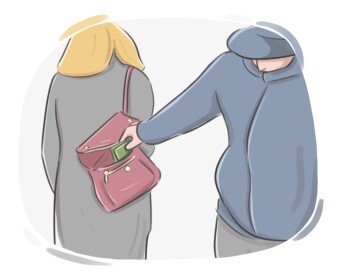
Ex: The store owner reported several cases of shoplifting last month .
mugging [noun]

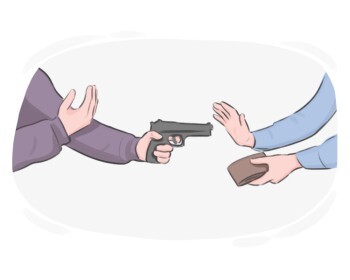
the act of threatening someone or beating them in order to gain some money

Ex: She was frightened after witnessing a mugging in the park .
bribery [noun]

the act of offering money to an authority to gain advantage

Ex: The investigation uncovered a network of bribery , with officials accepting kickbacks in exchange for favorable contracts .

the killing of a criminal as punishment
Ex: The court sentenced the convicted murderer to capital punishment by lethal injection .

the punishment in which an individual is made to stay in jail for the rest of their life, typically for committing a serious crime
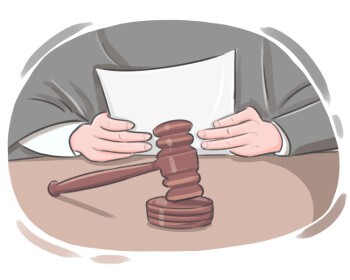
Ex: Serving a life sentence can be mentally and emotionally challenging for inmates .
sentence [noun]

the punishment that the court assigned for a guilty person

Ex: His lawyer appealed the harsh sentence .
offense [noun]

any act that is against a law

Ex: Committing fraud is a serious offense that can lead to jail time .
attempted [adjective]

(of a crime, suicide, etc.) not done successfully
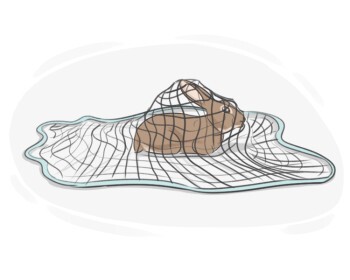
Ex: She survived an attempted suicide and sought help afterward .

to catch an animal or a person and keep them as a prisoner

Ex: The soldiers are capturing enemy combatants during the mission .

to give a severe punishment to someone who has committed a major crime
Ex: In some countries , certain crimes can lead to being condemned to death penalty by lethal injection .
corrupt [adjective]

using one's power or authority to do illegal things for personal gain or financial benefit
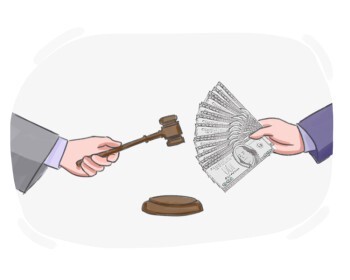
Ex: The corrupt mayor awarded government contracts to friends and family members without fair competition .
to fine [verb]

to make someone pay a sum of money as punishment for violation of the law

Ex: The company was fined heavily for violating environmental regulations .
penalty [noun]

an amount of money that must be paid as punishment for breaking a rule or law

Ex: She received a penalty after missing the tax deadline .
custody [noun]

a state in which a person is kept in jail or prison, particularly while waiting to be tried

Ex: The police took the suspect into custody after the car chase ended .
hostage [noun]

someone held prisoner by a person or group who will be set free if the demands of that person or group are met
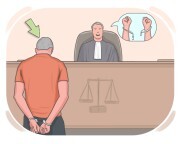
Ex: The movie depicted a tense standoff where the hero had to rescue the hostage without alerting the captors .
innocent [adjective]

not having committed a wrongdoing or offense

Ex: The jury found the defendant innocent of all charges due to lack of evidence .
guilty [adjective]

having done something that is not legal offense