Cambridge IELTS 19 - Academic - Test 1 - Listening - Part 4 (1)

Here you can find the vocabulary from Test 1 - Listening - Part 4 (1) in the Cambridge IELTS 19 - Academic coursebook, to help you prepare for your IELTS exam.

review-disable

review

flashcard-disable

flashcard

spelling-disable

spelling

quiz-disable

quiz

start-learning
Cambridge IELTS 19 - Academic

to exist or occur at an earlier time than something else

Ex: Ancient civilizations in Mesopotamia predate those in the Americas .
the quality of being fixed or steady and unlikely to change

Ex: Personal stability often comes from having a supportive social network , a sense of purpose , and the ability to adapt to life 's challenges with resilience and optimism .

after a particular event or time

Ex: She gave a brief introduction and subsequently opened the floor to questions .

a group of people who live in the same area

Ex: Our community holds regular meetings to discuss neighborhood issues .

to examine something scientifically, typically to discover facts or evidence

Ex: The government agency will investigate the safety of a new medication before approving it for public use .

to investigate something to gain knowledge or understanding about it

Ex: The team often explores innovative technologies to improve efficiency .

a community established by people living far from their homeland who retain nationality and cultural ties, without being governed by the home state

Ex: Life in the settlement preserved the traditions of the settlers .
permanent [adjective]

continuing to exist all the time, without significant changes

Ex: They moved into a permanent home after years of traveling from place to place .

to think that something is true without having proof or evidence

Ex: Yesterday , he mistakenly assumed that the meeting was canceled .
further [adverb]

at or to a more advanced point or stage

Ex:

to place or add something into a specific space or object

Ex: The nurse skillfully inserted the needle into the patient 's arm for a blood test .
to map [verb]

to systematically examine and record geographical features, data, or information

Ex: Environmental scientists mapped the river basin , conducting surveys to analyze water flow , pollution sources , and ecosystems .

the way something is arranged or organized in a particular pattern or structure

Ex: The birds flew in a V-shaped formation during migration .

a method used for measuring how old an organic material is by calculating the amount of carbon they contain

Ex: Through carbon dating , archaeologists were able to confirm the timeline of the early human settlement .
to prove [verb]

to show that something is true through the use of evidence or facts

Ex: The forensic analysis proved the suspect 's innocence .
remains [noun]

the parts of the objects and structures from ancient times that have survived destruction and been discovered

an area where a group of families or people live together, often in a newly established community

Ex: This settlement has a rich history dating back to the 1800s .
percent [noun]

a fraction of 100, commonly used to show proportions, rates, or comparisons

Ex: The store offered a discount of 20 percent on all items .
saturated [adjective]

having absorbed as much of a substance as possible at a given temperature, reaching its maximum concentration

Ex:
heather [noun]

a type of small, woody plant with tiny purple or pink flowers, often found in hilly or rocky areas

Ex: The forest floor was thick with heather and moss .
to decay [verb]

to be gradually damaged or destroyed as a result of natural processes

Ex: The fallen leaves have decayed , enriching the soil with nutrients .

to grow in amount, size, or number over time

Ex: Over time , stress can accumulate and affect one 's health .
acidity [noun]

the level of acid in a substance, often measured by a pH below 7

Ex: A pH level below 7 indicates high acidity in a solution .

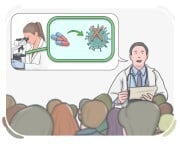
a visual or oral communication delivered to an audience, often using slides or other aids, to inform or persuade

Ex:
peat [noun]

a brownish substance, often found under the ground or in regions with wet climate, formed by plants dying and becoming buried, that once added to the soil, can enhance its quality and help plants grow faster

Ex:

the condition of not having enough of something essential, expected, or required, whether in amount, quality, or strength

Ex: The region suffers from a water deficiency during dry seasons .
neolithic [adjective]

related to the latest part of the Stone Age when humans used stones as tools and weapons

site [noun]

an area of land on which something is, was, or will be constructed

Ex:
currently [adverb]

at the present time

Ex: She is currently studying for her upcoming exams .

to need or demand something as necessary for a particular purpose or situation

Ex: To operate the machinery safely , it will require proper training .

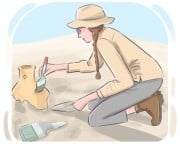
a person whose job is to study ancient societies using facts, objects, buildings, etc. remaining in excavation sites

average [noun]

a value that represents the central or typical point in a set of data, often calculated as the mean, median, or mode

Ex: The average for the week ’s temperature was higher than usual .
bog [noun]

a wet, spongy area of land that is often covered in moss and has poor drainage, making it soft and soggy

Ex: The swampy bog was difficult to navigate during the rain .
constantly [adverb]

in a steady or unchanging way over time

Ex: The machine operated constantly without any breakdowns .
to bury [verb]

to cover or hide something from sight, often by placing it in the ground or covering it with another material

Ex: The construction workers had to bury the utility lines beneath the road .

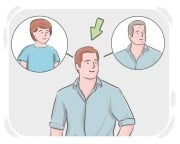
someone who held a position, office, or role before another person

Ex: Unlike his predecessor , the mayor focused on infrastructure development .
probe [noun]

a small tool or device that is placed inside something to test it or gather information

Ex: They used a probe to examine the inside of the engine .
well preserved [adjective]

kept in good condition or protected from damage, even after a long time

Ex: He found a well preserved book from the 1800s in the library .

a place used by local people for events, meetings, or activities that serve the public

Ex: A new community building was opened near the park .
Cambridge IELTS 19 - Academic
Test 1 - Listening - Part 1 Test 1 - Listening - Part 2 Test 1 - Listening - Part 3 (1) Test 1 - Listening - Part 3 (2)
Test 1 - Listening - Part 4 (1) Test 1 - Listening - Part 4 (2) Test 1 - Reading - Passage 1 (1) Test 1 - Reading - Passage 1 (2)
Test 1 - Reading - Passage 2 (1) Test 1 - Reading - Passage 2 (2) Test 1 - Reading - Passage 2 (3) Test 1 - Reading - Passage 3 (1)
Test 1 - Reading - Passage 3 (2) Test 1 - Reading - Passage 3 (3) Test 2 - Listening - Part 1 Test 2 - Listening - Part 2 (1)
Test 2 - Listening - Part 2 (2) Test 2 - Listening - Part 3 (1) Test 2 - Listening - Part 3 (2) Test 2 - Listening - Part 4 (1)
Test 2 - Listening - Part 4 (2) Test 2 - Reading - Passage 1 (1) Test 2 - Reading - Passage 1 (2) Test 2 - Reading - Passage 1 (3)
Test 2 - Reading - Passage 2 (1) Test 2 - Reading - Passage 2 (2) Test 2 - Reading - Passage 2 (3) Test 2 - Reading - Passage 3 (1)
Test 2 - Reading - Passage 3 (2) Test 2 - Reading - Passage 3 (3) Test 3 - Listening - Part 1 Test 3 - Listening - Part 2 (1)
Test 3 - Listening - Part 2 (2) Test 3 - Listening - Part 3 (1) Test 3 - Listening - Part 3 (2) Test 3 - Listening - Part 4 (1)
Test 3 - Listening - Part 4 (2) Test 3 - Reading - Passage 1 (1) Test 3 - Reading - Passage 1 (2) Test 3 - Reading - Passage 1 (3)
Test 3 - Reading - Passage 2 (1) Test 3 - Reading - Passage 2 (2) Test 3 - Reading - Passage 2 (3) Test 3 - Reading - Passage 3 (1)
Test 3 - Reading - Passage 3 (2) Test 3 - Reading - Passage 3 (3) Test 3 - Reading - Passage 3 (4) Test 4 - Listening - Part 1 (1)
Test 4 - Listening - Part 1 (2) Test 4 - Listening - Part 2 (1) Test 4 - Listening - Part 2 (2) Test 4 - Listening - Part 3 (1)
Test 4 - Listening - Part 3 (2) Test 4 - Listening - Part 4 (1) Test 4 - Listening - Part 4 (2) Test 4 - Listening - Part 4 (3)
Test 4 - Reading - Passage 1 (1) Test 4 - Reading - Passage 1 (2) Test 4 - Reading - Passage 1 (3) Test 4 - Reading - Passage 2 (1)
Test 4 - Reading - Passage 2 (2) Test 4 - Reading - Passage 2 (3) Test 4 - Reading - Passage 2 (4) Test 4 - Reading - Passage 3 (1)
Test 4 - Reading - Passage 3 (2) Test 4 - Reading - Passage 3 (3) Test 4 - Reading - Passage 3 (4)