Cambridge IELTS 19 - Academic - Test 2 - Listening - Part 2 (2)

Here you can find the vocabulary from Test 2 - Listening - Part 2 (2) in the Cambridge IELTS 19 - Academic coursebook, to help you prepare for your IELTS exam.

review-disable

review

flashcard-disable

flashcard

spelling-disable

spelling

quiz-disable

quiz

start-learning
Cambridge IELTS 19 - Academic
training [noun]

the process during which someone learns the skills needed in order to do a particular job

Ex:
continuous [adjective]

occurring repeatedly over a period of time

Ex: The continuous updates from the news station kept everyone informed during the storm .
technical [adjective]

having special and practical knowledge of a particular subject, art, craft, etc.

the ability to perform tasks effectively and efficiently, demonstrating both physical and intellectual readiness

Ex: The technician 's competence in troubleshooting equipment issues minimized downtime in production .
handling [noun]

the way someone manages or deals with a person, situation, or object

Ex: His handling of the team 's concerns helped improve their performance .
extreme [adjective]

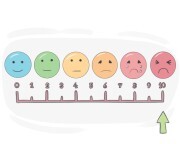
very high in intensity or degree

Ex: The region experienced extreme drought , leading to water shortages and crop failures .
to panic [verb]

to be suddenly overwhelmed by intense fear, often leading to irrational or wild actions

Ex: The sudden appearance of the snake caused the hiker to panic and run away .

to enroll in and complete an educational program or class to acquire new knowledge or skills
Ex: He did a course in culinary arts to pursue his passion for cooking .

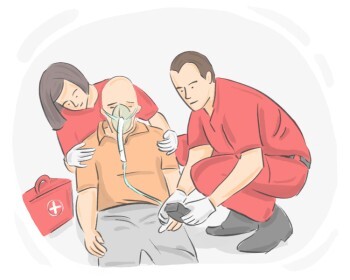
a basic medical treatment given to someone in an emergency before they are taken to the hospital

casualty [noun]

an accident that is deadly or injures one terribly

care [noun]

the act of providing treatment and paying attention to the physical and emotional needs of someone or something

Ex:
to tie [verb]

to create a loop or fastening by crossing and securing the ends of a material such as rope, string, or ribbon

Ex: He tied the straps of his backpack securely before setting off on the hike .
knot [noun]

a tight loop or fastening made by tying a rope, string, or thread, used to secure or join things together

Ex: She could n't untangle the knot in her necklace chain .
essential [adjective]

very necessary for a particular purpose or situation

Ex: Regular exercise is essential for maintaining physical fitness and health .
to lead [verb]

to be the leader or in charge of something

Ex: The CEO is leading the company 's expansion strategy .

a person with extensive knowledge or skill in a specific field or area of expertise

Ex: Engineers often become specialists in narrow technical fields .

to be flipped from an upright position

Ex: The boat unexpectedly turned over in the rough waves .
range [noun]

a variety of things that are different but are of the same general type

Ex: The restaurant 's menu features a range of dishes from different cuisines around the world .
hugely [adverb]

to an extensive degree

Ex: The company 's profits increased hugely after the strategic merger .

to make someone want to do something by giving them a reason or encouragement

Ex: The inspiring story of success served to motivate aspiring entrepreneurs .
involved [adjective]

actively participating or included in a particular activity, event, or situation
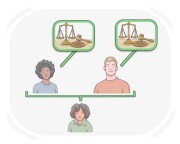
Ex:

the details about someone's family, experience, education, etc.

Ex: His background in social work inspired him to start a nonprofit organization .

high level of skill, knowledge, or proficiency in a particular field or subject matter

Ex: The mechanic 's expertise in automotive repair allowed him to quickly diagnose and fix complex engine issues .
to drag [verb]

to move in a slow and difficult manner

Ex: After the long hike , she could only drag herself up the steep hill , exhausted and weary .
stormy [adjective]

having strong winds, rain, or severe weather conditions
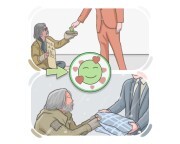
Ex: The ship struggled to navigate through the stormy waters , with waves crashing over the bow .
rewarding [adjective]

(of an activity) making one feel satisfied by giving one a desirable outcome

Ex: Completing a challenging project can be rewarding , as it demonstrates one 's capabilities and skills .
incident [noun]

an event or happening, especially a violent, unusual or important one

Ex: The teacher documented the bullying incident in the school records .
to tend [verb]

to be likely to develop or occur in a certain way because that is the usual pattern

Ex: Historical patterns suggest that economic downturns tend to lead to increased unemployment .
outcome [noun]

the result or consequence of a situation, event, or action

Ex: We are eagerly waiting to see the outcome of the new product launch .
eager [adjective]

having a strong desire for doing or experiencing something

Ex: The students were eager to learn about the fascinating topic in their next class .

to gain or obtain something gradually, typically through growth, experience, or learning

Ex: Through consistent practice and dedication , she developed fluency in a second language .
unsatisfying [adjective]

not meeting expectations and failing to provide a sense of fulfillment

Ex: She found the book unsatisfying because it was too predictable .
resident [noun]

a person who lives in a particular place, usually on a long-term basis

Ex: Residents of the neighborhood formed a community watch program to improve safety .
council [noun]

a group of elected people who govern a city, town, etc.
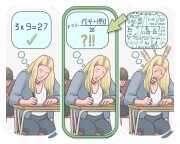
Ex:
rather [adverb]

to a somewhat notable, considerable, or surprising degree
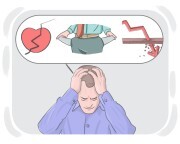
Ex: The instructions were rather unclear , causing some confusion .

to experience or endure a process, change, or event

Ex: As part of the research study , participants had to undergo various tests and assessments .

to seek financial contributions or donations for a particular cause, organization, or event

Ex: The organization fundraised through online campaigns and events .

to bring someone into a group, organization, or cause as a member or worker

Ex: The university is recruiting talented students for its honors program .
brief [adjective]

short in duration

Ex: The phone call was brief , lasting only a few minutes .

to make something more powerful, intense, or larger in quantity

Ex: The storm continued to build up strength over the ocean .
survival [noun]

the state in which a person manages to stay alive or strong despite dangers or difficulties

Ex: Survival in the wilderness requires knowledge of basic shelter and food sources .
to raise [verb]

to assemble money or resources, particularly in order to achieve or create something

Ex: The event raised over £ 30 000 for cancer research .
residential [adjective]

including living accommodations along with other activities or care

Ex: They decided on a residential program that includes housing and meals .

a large container of water used to create and study artificial waves, often for research or testing marine equipment

Ex: The research team used the wave tank to simulate ocean conditions .
Cambridge IELTS 19 - Academic
Test 1 - Listening - Part 1 Test 1 - Listening - Part 2 Test 1 - Listening - Part 3 (1) Test 1 - Listening - Part 3 (2)
Test 1 - Listening - Part 4 (1) Test 1 - Listening - Part 4 (2) Test 1 - Reading - Passage 1 (1) Test 1 - Reading - Passage 1 (2)
Test 1 - Reading - Passage 2 (1) Test 1 - Reading - Passage 2 (2) Test 1 - Reading - Passage 2 (3) Test 1 - Reading - Passage 3 (1)
Test 1 - Reading - Passage 3 (2) Test 1 - Reading - Passage 3 (3) Test 2 - Listening - Part 1 Test 2 - Listening - Part 2 (1)
Test 2 - Listening - Part 2 (2) Test 2 - Listening - Part 3 (1) Test 2 - Listening - Part 3 (2) Test 2 - Listening - Part 4 (1)
Test 2 - Listening - Part 4 (2) Test 2 - Reading - Passage 1 (1) Test 2 - Reading - Passage 1 (2) Test 2 - Reading - Passage 1 (3)
Test 2 - Reading - Passage 2 (1) Test 2 - Reading - Passage 2 (2) Test 2 - Reading - Passage 2 (3) Test 2 - Reading - Passage 3 (1)
Test 2 - Reading - Passage 3 (2) Test 2 - Reading - Passage 3 (3) Test 3 - Listening - Part 1 Test 3 - Listening - Part 2 (1)
Test 3 - Listening - Part 2 (2) Test 3 - Listening - Part 3 (1) Test 3 - Listening - Part 3 (2) Test 3 - Listening - Part 4 (1)
Test 3 - Listening - Part 4 (2) Test 3 - Reading - Passage 1 (1) Test 3 - Reading - Passage 1 (2) Test 3 - Reading - Passage 1 (3)
Test 3 - Reading - Passage 2 (1) Test 3 - Reading - Passage 2 (2) Test 3 - Reading - Passage 2 (3) Test 3 - Reading - Passage 3 (1)
Test 3 - Reading - Passage 3 (2) Test 3 - Reading - Passage 3 (3) Test 3 - Reading - Passage 3 (4) Test 4 - Listening - Part 1 (1)
Test 4 - Listening - Part 1 (2) Test 4 - Listening - Part 2 (1) Test 4 - Listening - Part 2 (2) Test 4 - Listening - Part 3 (1)
Test 4 - Listening - Part 3 (2) Test 4 - Listening - Part 4 (1) Test 4 - Listening - Part 4 (2) Test 4 - Listening - Part 4 (3)
Test 4 - Reading - Passage 1 (1) Test 4 - Reading - Passage 1 (2) Test 4 - Reading - Passage 1 (3) Test 4 - Reading - Passage 2 (1)
Test 4 - Reading - Passage 2 (2) Test 4 - Reading - Passage 2 (3) Test 4 - Reading - Passage 2 (4) Test 4 - Reading - Passage 3 (1)
Test 4 - Reading - Passage 3 (2) Test 4 - Reading - Passage 3 (3) Test 4 - Reading - Passage 3 (4)