Cambridge IELTS 19 - Academic - Test 2 - Listening - Part 4 (1)

Here you can find the vocabulary from Test 2 - Listening - Part 4 (1) in the Cambridge IELTS 19 - Academic coursebook, to help you prepare for your IELTS exam.

review-disable

review

flashcard-disable

flashcard

spelling-disable

spelling

quiz-disable

quiz

start-learning
Cambridge IELTS 19 - Academic
outwards [adverb]

in a direction away from the center or inside

Ex:

to make something visible

Ex: As the fog lifted , it revealed a picturesque view of the valley below .

a part of a living organism that is made up of cells and is designed to perform a specific function

Ex: The leaf 's structure helps it absorb sunlight for photosynthesis .
stylet [noun]

a thin, needle-like structure used by some animals or plants to pierce or penetrate surfaces, typically for feeding or extracting fluids
Ex: The plant uses a stylet to inject its seeds into the soil .
cell [noun]

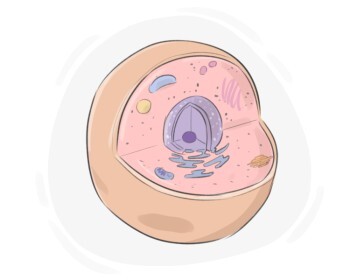
an organism's smallest unit, capable of functioning on its own
Ex: The discovery of cells and the development of cell theory by scientists such as Robert Hooke and Theodor Schwann revolutionized our understanding of living organisms .
habitat [noun]

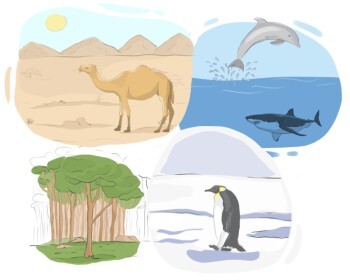
the place or area in which certain animals, birds, or plants naturally exist, lives, and grows
Ex: Urban expansion is destroying the habitat of many wild animals .
commonly [adverb]

in most cases; as a standard or norm

Ex: Bats are commonly mistaken for rodents .
bed [noun]

the bottom surface of a body of water, such as a sea, lake, etc.

Ex: Sediment gradually accumulates on the river bed , altering its depth over time .
capable [adjective]

having the required quality or ability for doing something

Ex: The capable student excels in academics , consistently achieving high grades .

to continue to live or exist specifically after experiencing a particular severe event or accident
Ex: The endangered species survived the poaching crisis thanks to conservation efforts .

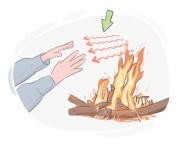
energy transmitted through space or matter in the form of waves or particles

Ex:
pressure [noun]

(physics) the amount of force exerted per area that is measured in pascal, newton per square meter, etc.
Ex:

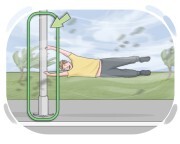
to resist or endure the force, pressure, or challenges imposed upon oneself
Ex: Plants in arid climates have adaptations to withstand drought conditions .

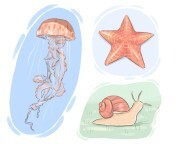
species that do not possess or cannot develop a spinal column, such as an arthropod, mollusk, etc.

Ex: The pond teemed with tiny invertebrates that served as food for larger fish .

a tiny, soft-bodied animal with eight legs that can survive in extreme conditions

Ex: A drop of water may contain many tardigrades .
microscopic [adjective]

too small to be seen with the naked eye
Ex: They found microscopic particles of dust on the surface of the antique book .
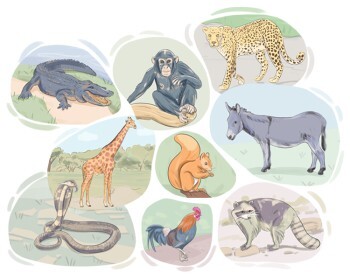
species [noun]

a group that animals, plants, etc. of the same type which are capable of producing healthy offspring with each other are divided into

Ex: The red wolf is a species of wolf that is native to the southeastern United States .

to be a member or part of a particular group or organization
Ex: She belonged to the drama club , showcasing her passion for acting .
phylum [noun]

(biology) a taxonomic category between a class and a kingdom

to range [verb]

to have or include a variety of what is mentioned

Ex: The discussion will range over various topics related to the company 's future plans .

(of an animal, child, or plant) to grow with strength, health, or energy
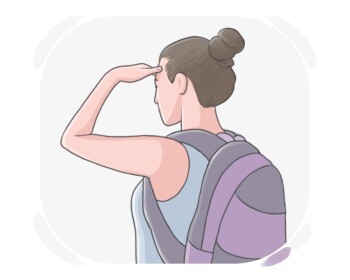
Ex: The young lion thrived in the wild , becoming strong and majestic .
to view [verb]

to carefully look at something

Ex: The scientist is viewing the microscopic cells under the microscope .
to coin [verb]

to create a new word, phrase, or expression

Ex: The marketing team decided to coin a catchy slogan for the new product .
to share [verb]

to hold common feelings, ideas, sentiments, etc. with someone else

Ex: John and Sarah share a love for hiking and exploring the outdoors .
trait [noun]

a distinguishing quality or characteristic, especially one that forms part of someone's personality or identity

Ex: Strong communication is a key trait for success in business .
rounded [adjective]

having a smooth and curved shape, lacking sharp angles or corners

Ex: The rounded handle of the mug fit comfortably in his hand .
barrel [noun]

a round, hollow container with flat ends and curved sides, usually made of wood or metal, used to hold liquids
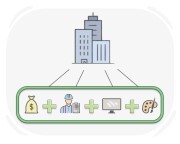
Ex: A large barrel of oil stood in the corner .

to be made up of various components or parts within a whole

Ex: His collection comprises rare books and antique manuscripts .
segment [noun]

one of the repeating divisions of an insect's body, often including paired appendages
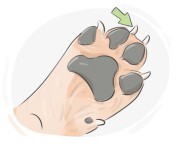
Ex: The abdomen consists of several segments .
claw [noun]

a sharp and curved nail on the toe of an animal or a bird

Ex: A claw on the lobster is strong enough to break shells .
disc [noun]

a rounded cartilage between the spinal bones

by means of [preposition]

by using or with the help of something

Ex: She cured her insomnia by means of meditation and yoga .
suction [noun]

the act of pulling something in by using air, water, or another force to create a space with lower pressure
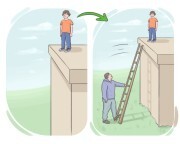
Ex: The cup stuck to the wall because of suction .

to give someone or something the means or ability to do something

Ex: Financial assistance can enable students to pursue higher education .
to cling [verb]

to grip or hold onto something tightly, making it difficult to separate or detach
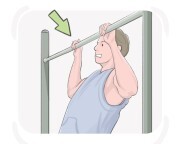
Ex:
to grip [verb]

to firmly hold something

Ex: The weightlifter carefully gripped the barbell before lifting it off the ground .
prey [noun]

an animal that is hunted and eaten by another animal
Ex: The spider spun a web to catch its prey .
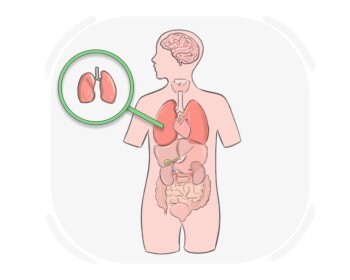
lung [noun]

each of the two organs in the chest that helps one breathe
Ex: Pneumonia , an infection of the lungs , can cause symptoms such as fever , cough , and chest pain , and may require antibiotic treatment to resolve .
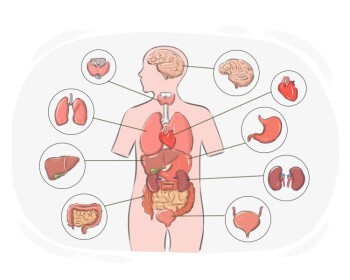
organ [noun]

any vital part of the body which has a particular function
Ex: The liver is a complex organ that performs numerous functions , including detoxification .

the action of taking air into the lungs and sending it out again

Ex: The athlete 's fast breathing showed the intensity of the race .
at all [adverb]

to the smallest amount or degree

Ex: Call me if you 're at all worried .
fluid [noun]

a substance that flows easily and takes the shape of its container, including both liquids and gases

Ex: The doctor recommended more fluids for hydration .
cavity [noun]

a natural empty space or hollow area inside the body

Ex: Sound echoes in the vocal cavity .
rather [adverb]

to a somewhat notable, considerable, or surprising degree
Ex: The instructions were rather unclear , causing some confusion .

(of something sharp) to make a hole or break in or through something

Ex: The knife pierced the meat with ease .

used to indicate that the speaker or writer is providing an exact or accurate version of something, often to clarify, specify, or emphasize a particular point

Ex: The distance between the two cities is 50 miles , to be precise .

a very tiny, soft-bodied animal with eight short legs that lives in wet places like moss and can survive in extremely hard conditions

Ex: Moss piglets can stay alive without food for a long time .
squashed [adjective]

something that has been crushed or flattened

Ex: He sat on the fruit , leaving a squashed banana on the chair .

without going into specific details or rare cases

Ex: Generally speaking , students do well when they study often .
Cambridge IELTS 19 - Academic
Test 1 - Listening - Part 1 Test 1 - Listening - Part 2 Test 1 - Listening - Part 3 (1) Test 1 - Listening - Part 3 (2)
Test 1 - Listening - Part 4 (1) Test 1 - Listening - Part 4 (2) Test 1 - Reading - Passage 1 (1) Test 1 - Reading - Passage 1 (2)
Test 1 - Reading - Passage 2 (1) Test 1 - Reading - Passage 2 (2) Test 1 - Reading - Passage 2 (3) Test 1 - Reading - Passage 3 (1)
Test 1 - Reading - Passage 3 (2) Test 1 - Reading - Passage 3 (3) Test 2 - Listening - Part 1 Test 2 - Listening - Part 2 (1)
Test 2 - Listening - Part 2 (2) Test 2 - Listening - Part 3 (1) Test 2 - Listening - Part 3 (2) Test 2 - Listening - Part 4 (1)
Test 2 - Listening - Part 4 (2) Test 2 - Reading - Passage 1 (1) Test 2 - Reading - Passage 1 (2) Test 2 - Reading - Passage 1 (3)
Test 2 - Reading - Passage 2 (1) Test 2 - Reading - Passage 2 (2) Test 2 - Reading - Passage 2 (3) Test 2 - Reading - Passage 3 (1)
Test 2 - Reading - Passage 3 (2) Test 2 - Reading - Passage 3 (3) Test 3 - Listening - Part 1 Test 3 - Listening - Part 2 (1)
Test 3 - Listening - Part 2 (2) Test 3 - Listening - Part 3 (1) Test 3 - Listening - Part 3 (2) Test 3 - Listening - Part 4 (1)
Test 3 - Listening - Part 4 (2) Test 3 - Reading - Passage 1 (1) Test 3 - Reading - Passage 1 (2) Test 3 - Reading - Passage 1 (3)
Test 3 - Reading - Passage 2 (1) Test 3 - Reading - Passage 2 (2) Test 3 - Reading - Passage 2 (3) Test 3 - Reading - Passage 3 (1)
Test 3 - Reading - Passage 3 (2) Test 3 - Reading - Passage 3 (3) Test 3 - Reading - Passage 3 (4) Test 4 - Listening - Part 1 (1)
Test 4 - Listening - Part 1 (2) Test 4 - Listening - Part 2 (1) Test 4 - Listening - Part 2 (2) Test 4 - Listening - Part 3 (1)
Test 4 - Listening - Part 3 (2) Test 4 - Listening - Part 4 (1) Test 4 - Listening - Part 4 (2) Test 4 - Listening - Part 4 (3)
Test 4 - Reading - Passage 1 (1) Test 4 - Reading - Passage 1 (2) Test 4 - Reading - Passage 1 (3) Test 4 - Reading - Passage 2 (1)
Test 4 - Reading - Passage 2 (2) Test 4 - Reading - Passage 2 (3) Test 4 - Reading - Passage 2 (4) Test 4 - Reading - Passage 3 (1)
Test 4 - Reading - Passage 3 (2) Test 4 - Reading - Passage 3 (3) Test 4 - Reading - Passage 3 (4)