Cambridge IELTS 19 - Academic - Test 1 - Reading - Passage 2 (3)

Here you can find the vocabulary from Test 1 - Reading - Passage 2 (3) in the Cambridge IELTS 19 - Academic coursebook, to help you prepare for your IELTS exam.

review-disable

review

flashcard-disable

flashcard

spelling-disable

spelling

quiz-disable

quiz

start-learning
Cambridge IELTS 19 - Academic

to prevent something from moving or progressing

Ex: Inadequate funding may hamper the development of essential infrastructure .

(of a business or organization) to function or work in a specific place or in a particular manner

Ex: The store will operate as usual during the holiday season .
rising [adjective]

increasing in degree, number, or height

Ex:

to be obligated to do something because it is demanded by a law or rule

Ex: The policy requires that employees complete mandatory safety training every year .

to gain something positive, advantageous, or beneficial from a situation or action

Ex: By attending the conference , she profited from networking with industry leaders .

the fact or state of existing or being objectively real

Ex: His existence was a subject of intense speculation after he disappeared without a trace .
raid [noun]

a surprise attack against a place or a group of people

Ex: The police conducted a raid on the warehouse , uncovering a large cache of illegal weapons .
steady [adjective]

regular and constant for a long period of time

Ex: She maintained a steady pace during the marathon , finishing strong .
slave [noun]

a person who is excessively or completely controlled by someone or something, often implying a lack of freedom or autonomy

essential [adjective]

very necessary for a particular purpose or situation

Ex: Regular exercise is essential for maintaining physical fitness and health .

the business of using the land to grow and take care of crops and livestock

mining [noun]

the process of extracting valuable minerals or other materials from the earth

Ex: She works in mining , specifically in the extraction of rare metals .

a mutual understanding or agreement established between people

Ex: We came to an arrangement about sharing the rent .
grain [noun]

small, hard seeds that are harvested from cereal plants and used as a food source

Ex: Quinoa is a versatile grain that can be used in salads or as a side dish .
citizen [noun]

someone whose right of belonging to a particular state is legally recognized either because they are born there or are naturalized

Ex: The government introduced new policies to protect the rights of its citizens .
voice [noun]

a specific opinion on something

Ex: In the boardroom , diverse voices were heard as members discussed the company 's future direction and strategy .
Senate [noun]

the upper chamber of the United States Congress, responsible for lawmaking, oversight, and approval of appointments

Ex:

to ask something from someone in an urgent and forceful manner

Ex: The protesters gathered in front of the government building to demand justice for the victims of the recent incident .
culprit [noun]

a person who is responsible for a crime or wrongdoing

Ex: Investigators worked hard to identify the culprit .
further [adverb]

at or to a more advanced point or stage

Ex:
emboldened [adjective]

feeling more confident or courageous, often as a result of encouragement or support

Ex: His emboldened attitude helped him tackle difficult tasks with ease .

to take someone away and hold them in captivity, typically to demand something for their release

Ex: Parents educate their children about the dangers of strangers who may attempt to kidnap them .
prominent [adjective]

well-known or easily recognizable due to importance, influence, or distinct features

Ex: The prominent scientist made groundbreaking discoveries in the field of medicine .

a person of importance in society due to high rank

ransom [noun]

an amount of money demanded or paid for the release of a person who is in captivity

Ex: The pirates released the crew unharmed after receiving the agreed-upon ransom from the shipping company .

used for emphasizing that a person or thing that is going to be mentioned will surprise the listener or reader

to remain functional beyond a certain period or expected lifespan

Ex: Many traditions have outlived their origins and continue to be celebrated today .
concerted [adjective]

carried out jointly by multiple individuals or groups

Ex: The government launched a concerted crackdown on organized crime in the city , involving multiple law enforcement agencies .
to grant [verb]

to formally give something, often after careful consideration or approval, especially in a manner that acknowledges its significance or importance

Ex: The judge granted custody of the children to the mother , considering her stable living conditions .
vast [adjective]

very great in amount or number

Ex: The vast number of volunteers ensured the event ran smoothly .

to fight or contend against someone or something, often in a physical or armed conflict

Ex: Soldiers are trained to combat enemies on the battlefield .
menace [noun]

someone or something that causes or is likely to cause danger or damage

Ex: The dictator 's regime was considered a menace to the neighboring countries .
personal [adjective]

only relating or belonging to one person

Ex: The counselor offered personal advice tailored to each student 's needs .
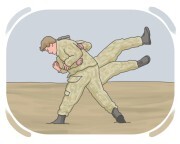
command [noun]

authority or control over people, resources, or operations
Ex: The general assumed command during the crisis .
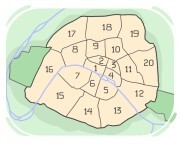
district [noun]

an area of a city or country with given official borders used for administrative purposes

Ex:

to distribute or provide something to others

Ex: The charity assigned donated goods to families in need .

to remove something harmful, unwanted, or immoral from a person, place, or system

Ex: The house was cleansed of old furniture before the renovation began .
process [noun]

a specific course of action that is performed in order to accomplish a certain objective
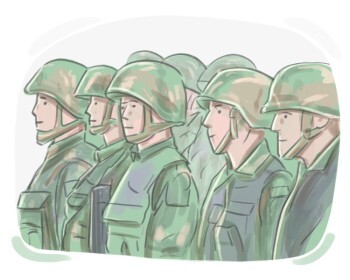
Ex: We need to streamline the hiring process to attract qualified candidates .
troop [noun]

armed forces or soldiers, especially by large numbers

Ex: The rescue mission required the mobilization of a specialized troop trained for high-risk operations .
at the hands of [preposition]

as a result of actions or treatment carried out by a particular person or group

Ex: Many innocent civilians lost their lives at the hands of the dictator .

to assign or establish a specific place or position for something

Ex: The event organizers need to locate the food stalls strategically around the venue .
maritime [adjective]

positioned near the sea or the ocean

to have or hold something within or include something as a part of a larger entity or space

Ex: The cupboard contains dishes , cups , and other kitchenware .

a mention or citation of something, often to provide context or support for an idea

Ex: The report contained a reference to the latest research in the field .
denial [noun]

the refusal to accept or acknowledge something, especially when it is true or obvious

Ex: His denial of the facts led to a lack of trust in him .

the state of being part of something or having a connection with it

Ex: The company encouraged employees involvement in decision-making .
campaign [noun]

a series of organized activities that are intended to achieve a particular goal

Ex: The environmental group launched a campaign to reduce plastic waste in oceans .

to complete or conduct a task, job, etc.

Ex: The detective was assigned to carry out the investigation into the mysterious disappearance .
mention [noun]

a short reference to someone or something, often made in speech or writing without giving many details

Ex: I was happy to get a mention in the credits .
vessel [noun]

any vehicle designed for travel across or through water

Ex: The cruise vessel offered luxurious accommodations and amenities for its passengers .

a person or group that exercises administrative or controlling power over others

Ex:

the resources or activities upon which an individual or household depends for their sustenance and survival

Ex: Small businesses such as shops and restaurants are vital for urban dwellers ' livelihoods , offering employment opportunities and goods and services .
goods [noun]

items made or produced for sale

Ex: The shipment of goods arrived late , causing a delay in restocking the shelves .

to guess the value, number, quantity, size, etc. of something without exact calculation
Ex: He estimated the distance to be around five miles .
attitude [noun]

the typical way a person thinks or feels about something or someone, often affecting their behavior and decisions

Ex: He approached the project with a can-do attitude , inspiring his team to work diligently towards success .

to think about someone or something in a specified way

Ex:
view [noun]

a particular way of seeing or understanding something

Ex: He offered a view that considered long-term effects .
evident [adjective]

easily perceived by the mind or senses
Ex: Her talent for singing was evident from her powerful and melodious voice .

to provide something needed or wanted

Ex: The company will supply all the necessary materials for the project .
call [noun]

a strong request or demand for something to happen, often expressed publicly

Ex: The crisis sparked calls for better healthcare policies .

used to introduce an opposing statement

Ex: She doubted his motives ; she trusted him nevertheless .

to cause something to occur

Ex: Insufficient preparation can result in failure in an exam .
hostage [noun]

someone held prisoner by a person or group who will be set free if the demands of that person or group are met

Ex: The movie depicted a tense standoff where the hero had to rescue the hostage without alerting the captors .

a Latin phrase (or its abbreviation) used to indicate that special attention should be paid to something

Cambridge IELTS 19 - Academic
Test 1 - Listening - Part 1 Test 1 - Listening - Part 2 Test 1 - Listening - Part 3 (1) Test 1 - Listening - Part 3 (2)
Test 1 - Listening - Part 4 (1) Test 1 - Listening - Part 4 (2) Test 1 - Reading - Passage 1 (1) Test 1 - Reading - Passage 1 (2)
Test 1 - Reading - Passage 2 (1) Test 1 - Reading - Passage 2 (2) Test 1 - Reading - Passage 2 (3) Test 1 - Reading - Passage 3 (1)
Test 1 - Reading - Passage 3 (2) Test 1 - Reading - Passage 3 (3) Test 2 - Listening - Part 1 Test 2 - Listening - Part 2 (1)
Test 2 - Listening - Part 2 (2) Test 2 - Listening - Part 3 (1) Test 2 - Listening - Part 3 (2) Test 2 - Listening - Part 4 (1)
Test 2 - Listening - Part 4 (2) Test 2 - Reading - Passage 1 (1) Test 2 - Reading - Passage 1 (2) Test 2 - Reading - Passage 1 (3)
Test 2 - Reading - Passage 2 (1) Test 2 - Reading - Passage 2 (2) Test 2 - Reading - Passage 2 (3) Test 2 - Reading - Passage 3 (1)
Test 2 - Reading - Passage 3 (2) Test 2 - Reading - Passage 3 (3) Test 3 - Listening - Part 1 Test 3 - Listening - Part 2 (1)
Test 3 - Listening - Part 2 (2) Test 3 - Listening - Part 3 (1) Test 3 - Listening - Part 3 (2) Test 3 - Listening - Part 4 (1)
Test 3 - Listening - Part 4 (2) Test 3 - Reading - Passage 1 (1) Test 3 - Reading - Passage 1 (2) Test 3 - Reading - Passage 1 (3)
Test 3 - Reading - Passage 2 (1) Test 3 - Reading - Passage 2 (2) Test 3 - Reading - Passage 2 (3) Test 3 - Reading - Passage 3 (1)
Test 3 - Reading - Passage 3 (2) Test 3 - Reading - Passage 3 (3) Test 3 - Reading - Passage 3 (4) Test 4 - Listening - Part 1 (1)
Test 4 - Listening - Part 1 (2) Test 4 - Listening - Part 2 (1) Test 4 - Listening - Part 2 (2) Test 4 - Listening - Part 3 (1)
Test 4 - Listening - Part 3 (2) Test 4 - Listening - Part 4 (1) Test 4 - Listening - Part 4 (2) Test 4 - Listening - Part 4 (3)
Test 4 - Reading - Passage 1 (1) Test 4 - Reading - Passage 1 (2) Test 4 - Reading - Passage 1 (3) Test 4 - Reading - Passage 2 (1)
Test 4 - Reading - Passage 2 (2) Test 4 - Reading - Passage 2 (3) Test 4 - Reading - Passage 2 (4) Test 4 - Reading - Passage 3 (1)
Test 4 - Reading - Passage 3 (2) Test 4 - Reading - Passage 3 (3) Test 4 - Reading - Passage 3 (4)